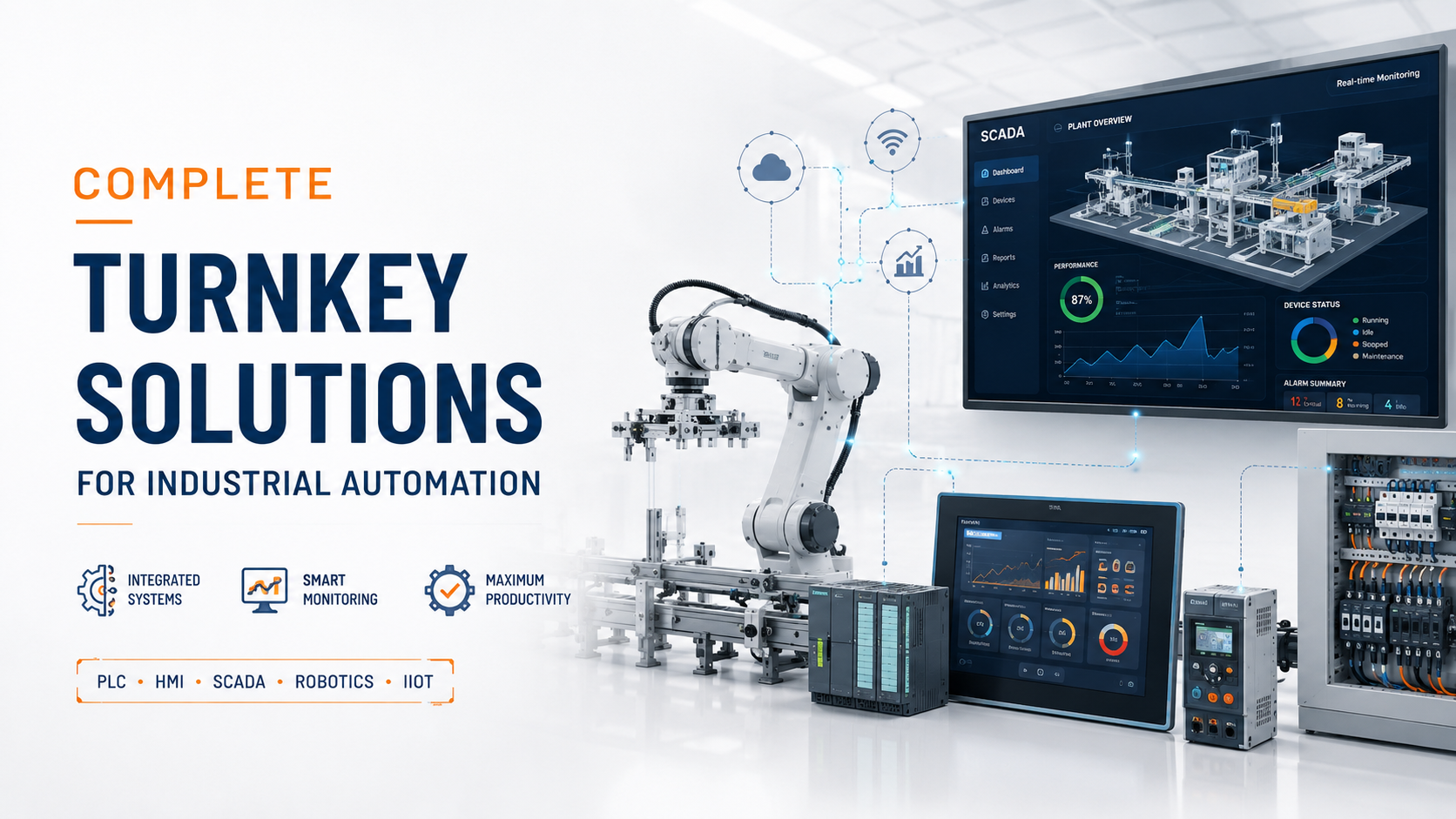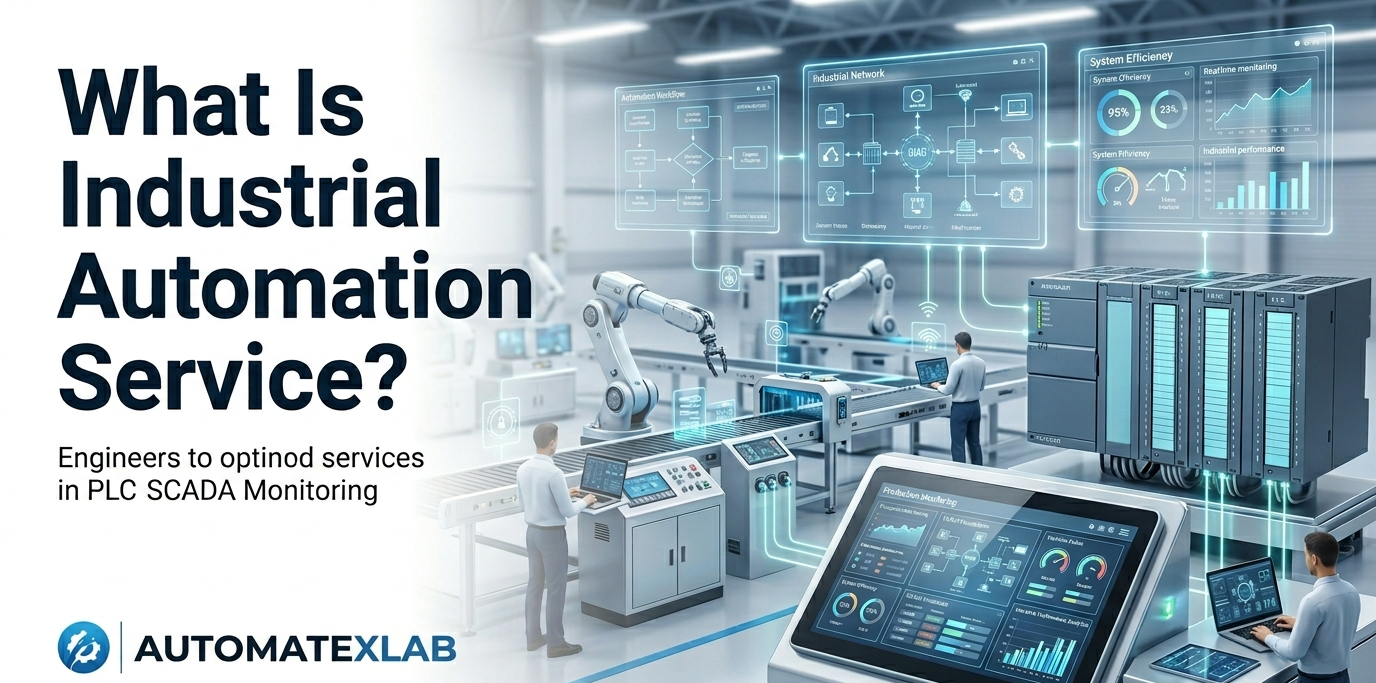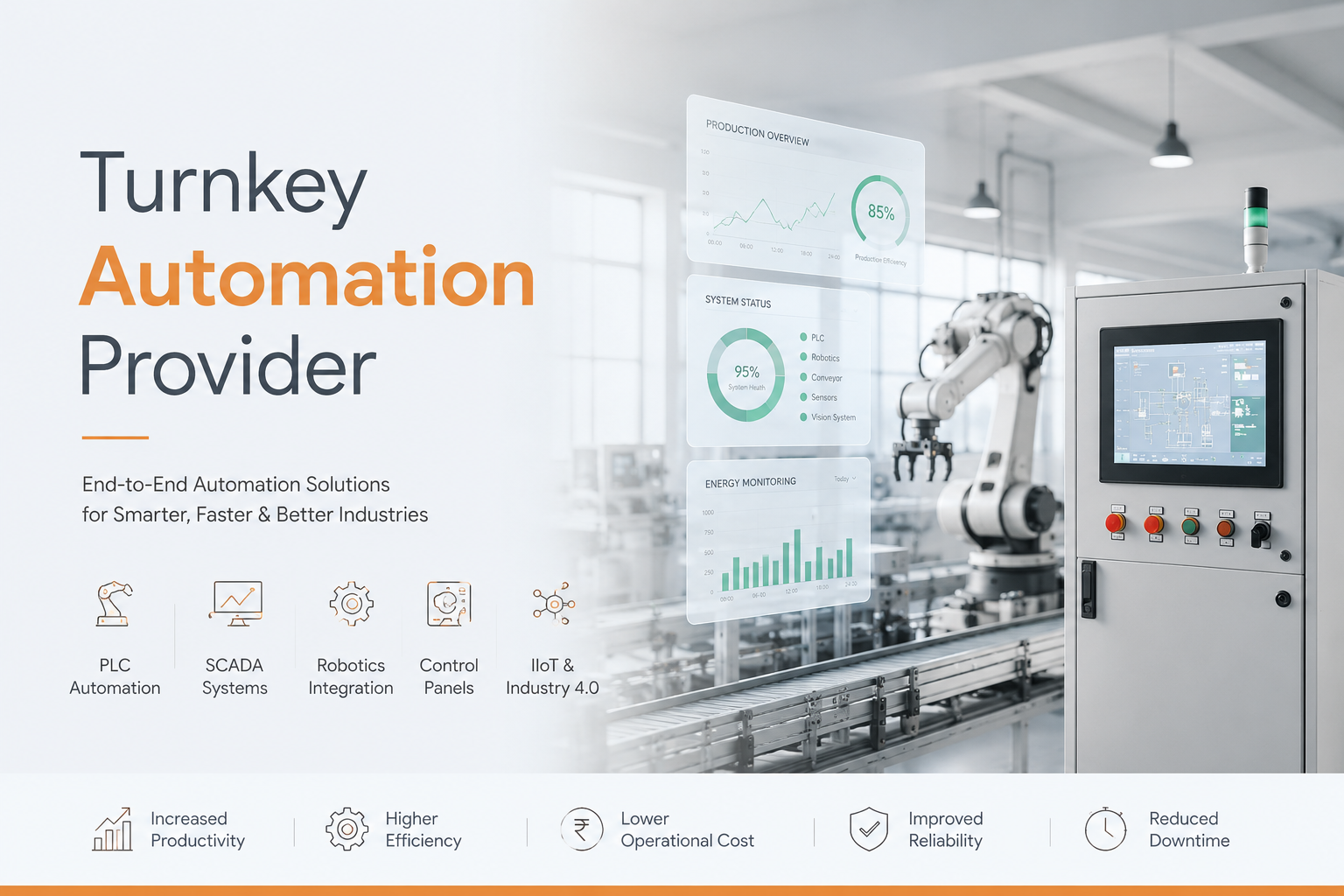
Industrial automation has become the backbone of modern manufacturing. As production demands rise and competition intensifies, businesses need reliable systems that work seamlessly together. The challenge? Coordinating multiple vendors, integrating different technologies, and managing complex timelines often leads to delays, cost overruns, and frustration.
This is where a turnkey automation provider changes the game. Instead of juggling contractors, software developers, and equipment suppliers, you work with one team that handles everything from initial design to final commissioning.
AutomatexLab delivers complete industrial automation solutions across manufacturing, automotive, food and beverage, pharmaceutical, oil and gas, and water treatment industries. Our end-to-end approach eliminates the headaches of multi-vendor coordination while ensuring your automation systems work flawlessly from day one.
What Is a Turnkey Automation Provider?
A turnkey automation provider is a single company that manages your entire automation project. The term “turnkey” means you receive a complete, ready-to-operate system. You don’t need to coordinate between different vendors or manage separate contracts for hardware, software, and installation.
One company handles everything. From the moment you share your requirements to the day your production line runs at full capacity, your turnkey provider manages design, programming, manufacturing, installation, and commissioning.
This approach eliminates communication gaps. You avoid the finger-pointing that happens when systems fail and no one takes responsibility. With a turnkey provider, accountability is clear because one team owns the entire project.
What Is Included in Turnkey Automation?
System Design
Every automation project starts with thorough system design. Engineers analyze your production requirements, workflow bottlenecks, and operational goals. They create detailed electrical drawings, process flow diagrams, and equipment layouts that serve as blueprints for your automated system.
PLC Programming
Programmable Logic Controllers form the brain of industrial automation. Your turnkey provider develops custom PLC programs that control machines, manage processes, and ensure smooth production flow. These programs handle everything from simple on/off operations to complex sequential logic.
SCADA Development
Supervisory Control and Data Acquisition systems provide real-time visibility into your operations. SCADA dashboards display machine status, production metrics, and alarm notifications. Operators monitor entire facilities from centralized control rooms.
HMI Design
Human Machine Interfaces give operators intuitive touchscreen controls. Well-designed HMIs simplify machine operation, reduce training time, and minimize operator errors. Clear graphics and logical navigation make complex systems easy to manage.
Control Panel Manufacturing
Physical control panels house all electrical components. Your turnkey provider designs, manufactures, and tests these panels before installation. This includes PLC mounting, component wiring, and protection systems.
Robotics Integration
Modern automation often requires industrial robots. Your provider handles robot selection, programming, safety integration, and coordination with other automated systems. Robots work seamlessly with conveyors, PLCs, and vision systems.
Installation and Commissioning
After manufacturing and programming, technicians install equipment at your facility. They wire connections, test systems, and fine-tune settings. Commissioning ensures everything operates correctly before handover.
Maintenance and Support
Quality turnkey providers offer ongoing technical support. They troubleshoot issues, provide spare parts, perform preventive maintenance, and upgrade systems as your needs evolve.
Why “Turnkey” Matters
One Point of Contact
You communicate with a single project manager instead of coordinating multiple vendors. This streamlines decision-making and speeds up problem resolution.
Faster Project Execution
When one team handles design, programming, and installation, projects move faster. There’s no waiting for vendors to align schedules or resolve integration conflicts.
Reduced Downtime
Integrated systems from a single provider experience fewer compatibility issues. This means less troubleshooting during installation and fewer production interruptions.
Better Accountability
If something goes wrong, you know exactly who to call. No vendor blames another vendor’s equipment. Your turnkey provider owns every aspect of system performance.
Lower Integration Risks
Different vendors often supply equipment that doesn’t communicate properly. Turnkey providers ensure all components work together because they control the entire technology stack.
Why Industries Need Turnkey Automation Solutions
Rising Production Demands
Manufacturing expectations have shifted dramatically. Customers want faster delivery, higher quality, and more customization. Manual processes can’t keep pace with these demands.
Automated systems run continuously with consistent precision. They maintain product quality across millions of units and adapt quickly to new product specifications.
Labor Challenges
Skilled workers are increasingly hard to find. Even when available, manual labor introduces variability. Human error affects quality, and fatigue impacts productivity during long shifts.
Automation handles repetitive tasks that drain workforce morale. This frees skilled workers for higher-value activities like quality control, maintenance, and process improvement.
Need for Real-Time Monitoring
Modern manufacturing requires instant visibility into production status. Managers need to know immediately when problems occur, not hours later when reviewing shift reports.
Production Tracking
Automated systems count units produced, track cycle times, and measure throughput. This data helps identify bottlenecks and optimize workflows.
Machine Performance Analytics
Sensors monitor machine health continuously. You see trends in vibration, temperature, and power consumption that indicate developing problems.
Predictive Maintenance
Instead of fixing machines after they break, predictive systems alert you before failures occur. This prevents unplanned downtime and extends equipment life.
Energy Efficiency and Cost Reduction
Automation optimizes resource usage in ways manual operations cannot match.
Reduced Waste
Precise automated processes minimize material waste. Robots place components accurately, filling systems dispense exact quantities, and cutting machines optimize material usage.
Lower Operating Costs
While automation requires upfront investment, operating costs drop significantly. You reduce labor expenses, minimize scrap, and decrease energy consumption through optimized processes.
Better Machine Utilization
Automated systems track actual runtime versus available time. This reveals opportunities to increase capacity without buying new equipment.
Industries That Benefit from Turnkey Automation
Manufacturing Industry
General manufacturing encompasses diverse operations, all benefiting from automation.
Assembly Lines
Automated assembly systems position components accurately, apply precise torque to fasteners, and verify assembly completeness. Quality improves while production speed increases.
Packaging Systems
Automated packaging handles product sorting, carton forming, product insertion, sealing, labeling, and palletizing. Systems adapt to different package sizes with quick changeovers.
Conveyor Automation
Smart conveyor systems route products automatically, accumulate items during downstream slowdowns, and synchronize with packaging or processing equipment.
Automotive Industry
Automotive manufacturing demands precision, speed, and consistency that only automation delivers.
Robotic Welding
Welding robots deliver perfect welds repeatedly. They access difficult angles, maintain consistent speed, and ensure structural integrity across thousands of vehicles.
Material Handling
Automated guided vehicles transport components between workstations. Robotic systems load and unload parts, eliminating manual lifting and reducing injury risk.
Quality Inspection Systems
Vision systems inspect painted surfaces, verify assembly completeness, and measure critical dimensions. Defects are caught immediately, not after vehicles reach customers.
Food and Beverage Industry
Food production faces unique challenges around hygiene, consistency, and regulatory compliance.
Batch Processing
Automated batch systems measure ingredients precisely, control mixing sequences, and monitor temperatures. Recipe management ensures consistent product quality.
Filling and Packaging Automation
High-speed filling systems handle liquids, powders, and solids. They fill containers to exact weights or volumes, apply caps, and add labels without human contact.
Hygiene-Focused Automation
Food-grade automation uses stainless steel construction, washdown-rated components, and sanitary design principles. Systems meet FDA and USDA requirements.
Pharmaceutical Industry
Pharmaceutical manufacturing demands absolute precision and extensive documentation.
Precision Process Control
Drug manufacturing requires exact temperatures, pressures, and mixing times. Automated systems maintain these parameters within tight tolerances.
Validation Systems
Pharmaceutical automation includes comprehensive data logging and audit trails. Every process step is recorded for regulatory compliance.
Compliance Automation
Systems enforce SOPs automatically, prevent unauthorized changes, and generate documentation required for FDA validation.
Oil and Gas Industry
Energy sector operations often occur in remote or hazardous locations where automation is essential.
Remote Monitoring
SCADA systems monitor pipelines, wells, and processing facilities from central control centers. Operators manage vast infrastructure without physical site visits.
SCADA Integration
Comprehensive SCADA networks gather data from hundreds of remote sites. They control valves, pumps, and compressors while monitoring pressures, flows, and levels.
Safety Systems
Automated safety systems detect leaks, monitor toxic gases, and shut down equipment during emergencies. Response times are faster than any manual intervention.
Water Treatment Plants
Water treatment requires reliable automation to ensure public health and environmental protection.
Pump Automation
Automated pump control maintains water pressure, manages storage tank levels, and optimizes energy usage. Systems adapt to changing demand patterns.
Flow Monitoring
Flow meters and automated valves ensure proper treatment chemical dosing. Systems maintain water quality while minimizing chemical waste.
Remote Operation Systems
Treatment facilities operate 24/7 with minimal staffing. Remote monitoring alerts operators to problems requiring attention while handling routine operations automatically.
Complete Turnkey Automation Services by AutomatexLab
PLC Automation Solutions
Programmable Logic Controllers drive industrial automation across every sector. AutomatexLab develops custom PLC solutions tailored to your specific processes.
PLC Programming
Our engineers write efficient, well-documented PLC code. Programs handle complex logic, safety interlocks, and communication with other systems. We follow industry best practices for reliable, maintainable code.
Process Automation
From simple machine control to complex multi-stage processes, we automate workflows that improve consistency and reduce manual intervention. Automated processes run faster and more reliably than manual operations.
Industrial Machine Control
We program PLCs to control motors, valves, conveyors, and processing equipment. Our solutions handle precise timing, synchronized motion, and coordinated sequences across multiple machines.
Supported PLC Platforms
AutomatexLab works with all major PLC brands, giving you flexibility in equipment selection.
Siemens PLC
We program Siemens S7-1200, S7-1500, and legacy S7-300/400 systems. Our engineers are proficient in TIA Portal and Step 7.
Mitsubishi PLC
Mitsubishi FX, Q, and iQ-R series PLCs are popular for their reliability and performance. We develop solutions using GX Works software.
Allen Bradley PLC
Rockwell Automation’s ControlLogix, CompactLogix, and Micro800 platforms power many industrial facilities. We program using Studio 5000 and Connected Components Workbench.
Delta PLC
Delta PLCs offer cost-effective automation for various applications. We work with DVP, AH500, and AS series controllers.
Schneider Electric PLC
Modicon M580, M340, and Modicon M221 PLCs provide robust automation platforms. We program using EcoStruxure Control Expert and SoMachine.
SCADA Development Services
Supervisory Control and Data Acquisition systems transform raw data into actionable insights.
Real-Time Monitoring Dashboards
Our SCADA systems display production status, machine conditions, and process variables in intuitive dashboards. Operators see exactly what’s happening across entire facilities.
Alarm Management
Smart alarm systems prioritize notifications, prevent alarm flooding, and guide operators through response procedures. Critical alarms receive immediate attention while minor issues are logged for later review.
Historical Data Logging
SCADA systems record production data continuously. This historical information supports quality analysis, regulatory compliance, and process optimization.
Remote Plant Monitoring
Modern SCADA enables secure remote access. Managers and engineers monitor operations from anywhere, responding to issues without traveling to the facility.
HMI Development
Human Machine Interfaces bridge the gap between complex automation and human operators.
User-Friendly Operator Screens
We design HMIs that operators understand immediately. Clear graphics, logical layouts, and consistent navigation reduce training time and minimize errors.
Machine Visualization
Visual representations show machine status at a glance. Animated graphics indicate running equipment, highlight active alarms, and display process flow.
Touchscreen Interfaces
Modern touchscreen HMIs replace banks of physical buttons and switches. Operators control complex processes through intuitive touch interactions.
Industrial Robotics Integration
Robots extend automation capabilities beyond what traditional machines can achieve.
Robotic Welding Systems
We integrate welding robots for automotive, metal fabrication, and structural steel applications. Systems include robot programming, fixture design, and safety barriers.
Pick and Place Robots
High-speed pick and place operations handle product sorting, packaging, and assembly. Vision guidance enables robots to handle variable part positions.
Material Handling Automation
Robots move materials between processes, load and unload machines, and palletize finished products. This eliminates heavy lifting and repetitive motion injuries.
Automated Assembly Systems
Robotic assembly cells combine multiple robots, conveyors, and quality inspection. Products move through assembly stations automatically.
Control Panel Design and Manufacturing
Electrical control panels house the components that power automation systems.
MCC Panels
Motor Control Centers coordinate multiple motor starters, variable frequency drives, and protection devices. We design MCC panels for industrial power distribution and motor control.
PLC Panels
Dedicated PLC panels protect controllers and I/O modules while providing organized wiring. Panels include power supplies, circuit protection, and communication devices.
VFD Panels
Variable Frequency Drive panels control motor speeds for pumps, fans, and conveyors. We include proper filtering, braking resistors, and cooling.
Power Distribution Systems
Main distribution panels deliver power throughout facilities. We design load centers, transformer banks, and backup power integration.
IIoT and Smart Factory Solutions
Industry 4.0 technologies connect machines, collect data, and enable intelligent manufacturing.
Cloud Connectivity
Modern automation systems upload data to cloud platforms. This enables advanced analytics, remote monitoring, and integration with business systems.
Production Analytics
Machine learning algorithms analyze production data to identify optimization opportunities. You discover patterns that improve efficiency and quality.
Remote Monitoring Systems
Secure cloud-based monitoring lets you check production status from smartphones or tablets. Real-time alerts notify you immediately when attention is needed.
Industry 4.0 Integration
We implement digital transformation initiatives including digital twins, augmented reality maintenance guides, and AI-powered quality control.
Advantages of Choosing AutomatexLab as Your Turnkey Automation Provider
Single Vendor Responsibility
Working with one provider eliminates the coordination headaches of multi-vendor projects.
Simplified Communication
You discuss requirements, changes, and issues with one project manager. There’s no confusion about who handles what or which vendor is responsible for integration problems.
Reduced Coordination Issues
Multiple vendors inevitably create scheduling conflicts and finger-pointing when problems arise. Single-vendor responsibility means one team coordinates all project aspects.
Faster Project Completion
Streamlined processes and integrated teams deliver faster results.
Better Project Management
Our project managers oversee every phase without waiting for external vendors. This eliminates delays caused by vendor scheduling conflicts.
Streamlined Execution
Design, programming, manufacturing, and installation happen in parallel rather than sequentially. This compressed timeline gets your systems operational faster.
Customized Automation Solutions
No two facilities are identical. We design systems that match your specific needs.
Tailored Systems for Each Industry
Food processing automation differs from pharmaceutical or automotive applications. We apply industry-specific knowledge to every project.
Scalable Automation Architecture
Start with essential automation and expand later. Our designs accommodate future growth without requiring complete system replacement.
Experienced Engineering Team
Our multidisciplinary team brings deep expertise to every project.
Automation Experts
Senior engineers with decades of experience design your systems. They’ve solved similar challenges across multiple industries.
Electrical Engineers
Licensed electrical engineers handle power distribution, motor control, and safety systems. Designs meet NEC and local electrical codes.
Robotics Specialists
Certified robot programmers optimize robot performance and integrate safety systems. They maximize throughput while ensuring operator safety.
Long-Term Technical Support
Our relationship continues long after commissioning.
Troubleshooting Assistance
When issues arise, our support team responds quickly. We diagnose problems remotely when possible and dispatch technicians when needed.
Preventive Maintenance
Scheduled maintenance visits catch problems before they cause downtime. We update software, calibrate sensors, and replace wear components.
Future Upgrades
As your business grows, we upgrade automation systems. Add capacity, integrate new equipment, or implement advanced features without starting over.
Turnkey Automation Process at AutomatexLab
Step One: Requirement Analysis
Every successful project starts with understanding your needs.
Understanding Production Goals
We discuss your production volumes, quality requirements, and efficiency targets. What problems are you trying to solve? What opportunities do you want to capture?
Site Inspection and Consultation
Our engineers visit your facility to assess existing equipment, electrical infrastructure, and space constraints. We identify integration opportunities and potential challenges.
Step Two: System Design
Detailed design planning prevents costly changes during installation.
Electrical Drawings
Complete electrical schematics show every wire, connection, and component. These drawings guide manufacturing and installation while serving as permanent documentation.
Automation Architecture
System architecture diagrams map PLCs, networks, SCADA servers, and field devices. We plan communication protocols, network topology, and data flow.
Process Flow Planning
Detailed process flow diagrams show how materials move through your facility and how automation systems coordinate production sequences.
Step Three: Hardware Selection
We specify equipment that balances performance, reliability, and value.
PLCs
Controller selection considers I/O requirements, processing speed, communication needs, and future expansion. We recommend PLCs that match your application perfectly.
Sensors
Proximity sensors, photoelectric sensors, vision systems, and process sensors provide the data automation systems need. We select sensors rated for your environment.
Drives
Variable frequency drives control motor speeds efficiently. We size drives properly and include necessary filtering and protection.
Robotics Systems
Robot selection depends on payload, reach, speed, and precision requirements. We recommend robots from leading manufacturers with strong support networks.
Step Four: Software Development
Programming brings automation systems to life.
PLC Logic Programming
Our programmers write efficient, maintainable PLC code. We use structured programming techniques, comprehensive commenting, and standardized naming conventions.
SCADA Development
Custom SCADA applications display your processes clearly. We design intuitive interfaces that operators learn quickly.
HMI Configuration
HMI screens provide machine-level control and monitoring. We create consistent interfaces across all machines for easier operator training.
Step Five: Panel Manufacturing
Control panels are built and tested in our facility before shipment.
Assembly
Technicians mount components on panel backplates following approved layouts. Components are positioned for easy maintenance access.
Wiring
All wiring follows color-coding standards and labeling conventions. Wire numbers match electrical drawings for easy troubleshooting.
Factory Testing
Completed panels undergo thorough testing before leaving our facility. We verify all circuits, test safety functions, and confirm communication links.
Step Six: Installation and Commissioning
On-site work brings everything together.
On-Site Integration
Installation crews mount panels, run conduit, pull cables, and make field connections. Work follows project schedules to minimize production disruption.
System Testing
After installation, we test every system function. Operators run machines through normal cycles while we monitor performance and adjust settings.
Production Startup
We support initial production runs, making real-time adjustments as needed. Systems are fine-tuned until they meet all performance requirements.
Step Seven: Training and Support
Successful automation requires knowledgeable operators and maintenance staff.
Operator Training
We train your operators on system operation, HMI navigation, and basic troubleshooting. Training includes both classroom instruction and hands-on practice.
Maintenance Guidance
Maintenance personnel learn system architecture, troubleshooting procedures, and preventive maintenance requirements. We provide detailed documentation and diagnostic tools.
Technical Support
Our support team remains available after commissioning. Phone support, remote diagnostics, and on-site visits keep your systems running smoothly.
Key Features of Modern Turnkey Automation Systems
Smart Monitoring
Contemporary automation systems provide unprecedented visibility into operations.
Equipment sensors track machine status continuously. SCADA systems aggregate this data into meaningful displays. Operators see production rates, quality metrics, and equipment health from centralized workstations.
Real-Time Analytics
Data analytics tools process production information as it’s generated. You spot trends immediately rather than discovering problems during monthly reviews. Real-time analytics enable proactive management.
Remote Access
Secure VPN connections let authorized personnel monitor and control systems from anywhere. Managers review production dashboards from home. Engineers troubleshoot issues remotely, reducing response times.
Predictive Maintenance
Advanced systems predict equipment failures before they occur. Machine learning algorithms analyze vibration patterns, temperature trends, and performance degradation. Maintenance teams receive alerts days or weeks before breakdowns.
Energy Monitoring
Automation systems track electrical consumption by machine, process, or production line. This visibility reveals opportunities to reduce energy costs through optimized scheduling and equipment upgrades.
AI-Based Production Optimization
Artificial intelligence algorithms optimize production parameters automatically. Systems adjust speeds, temperatures, and sequences to maximize throughput and quality based on current conditions.
Industrial Safety Integration
Modern automation includes comprehensive safety features. Safety PLCs monitor light curtains, emergency stops, and guard doors. Systems prevent machine operation when personnel are in danger zones.
Signs Your Factory Needs Automation
Frequent Production Downtime
If machines frequently stop for adjustments, changeovers, or failures, automation can help. Automated systems maintain consistent operation and alert maintenance before failures occur.
High Manual Labor Dependency
Relying on manual labor for repetitive tasks limits production capacity and introduces quality variability. Automation handles these tasks consistently while freeing workers for higher-value activities.
Inconsistent Product Quality
Quality problems often stem from process variation. Automated systems maintain precise control over temperatures, speeds, positions, and timing. This consistency improves quality dramatically.
High Energy Consumption
Manual processes rarely optimize energy usage. Automated systems adjust motor speeds, coordinate equipment operation, and minimize idle time. Energy costs drop significantly.
Production Bottlenecks
When certain processes limit overall throughput, automation can eliminate bottlenecks. Faster equipment, better coordination, or parallel processing increases capacity.
Lack of Real-Time Monitoring
If you discover problems only after production runs complete, you need better monitoring. Real-time systems alert you immediately when issues develop.
Rising Operational Costs
Increasing labor costs, material waste, and energy expenses squeeze profit margins. Automation reduces all these costs while improving productivity.
Why AutomatexLab Stands Out in Industrial Automation
End-to-End Automation Expertise
We handle every aspect of automation projects. Our capabilities span electrical engineering, control system programming, robotics integration, and mechanical design. You don’t need multiple contractors because we deliver complete solutions.
Industry-Specific Solutions
Generic automation rarely works well. We apply industry-specific knowledge to every project. Food processing systems meet sanitary standards. Pharmaceutical automation includes validation documentation. Automotive systems achieve automotive-grade reliability.
Advanced Robotics Integration
Many automation providers avoid robotics complexity. We embrace it. Our certified robot programmers integrate robots seamlessly with PLCs, conveyors, and vision systems.
Smart Factory Capabilities
We implement Industry 4.0 technologies including IIoT connectivity, cloud analytics, and AI-powered optimization. Your automation infrastructure supports digital transformation initiatives.
Reliable Technical Support
Our support team responds quickly when you need help. Remote diagnostics solve many issues immediately. For complex problems, technicians arrive on-site promptly.
Focus on Productivity and Efficiency
Every design decision prioritizes your operational success. We optimize cycle times, minimize changeover duration, and reduce maintenance requirements. Your return on investment matters to us.
Future of Turnkey Industrial Automation
Industry 4.0
The fourth industrial revolution transforms manufacturing through digital connectivity. Machines share data automatically. Production systems adapt to changing conditions. Business systems integrate seamlessly with factory floor operations.
AI-Powered Manufacturing
Artificial intelligence moves beyond simple automation. AI systems optimize production parameters in real-time, predict quality issues before they occur, and schedule maintenance intelligently.
Digital Twin Technology
Virtual replicas of physical systems enable simulation and optimization without production disruption. Engineers test process changes virtually before implementing them on actual equipment.
Autonomous Production Systems
Future factories operate with minimal human intervention. Autonomous mobile robots transport materials. Self-optimizing machines adjust parameters automatically. Production systems handle routine decisions without human input.
Smart Predictive Maintenance
Next-generation maintenance systems combine sensor data, operating history, and machine learning. They predict specific component failures weeks in advance and automatically order replacement parts.
Cloud-Based Industrial Monitoring
Manufacturing data migrates to cloud platforms. This enables sophisticated analytics, facilitates multi-site management, and supports mobile monitoring from anywhere.
Conclusion
Turnkey automation represents the smartest approach to industrial automation projects. By consolidating design, programming, manufacturing, and installation under one provider, you eliminate coordination headaches, reduce project timelines, and ensure seamless system integration.
The benefits extend far beyond project completion. Automated systems improve productivity through consistent high-speed operation, enhance quality by eliminating human variability, reduce costs through optimized resource usage, enable better decision-making through real-time data, and support business growth through scalable architecture.
AutomatexLab brings decades of automation expertise to every project. Our multidisciplinary team handles complete automation solutions across diverse industries. From PLC programming and SCADA development to robotics integration and smart factory implementation, we deliver systems that transform manufacturing operations.
Whether you’re automating a single machine or transforming an entire facility, turnkey automation provides the efficiency, reliability, and performance modern manufacturing demands. Don’t settle for fragmented solutions from multiple vendors when one experienced partner can deliver everything you need.
Ready to Automate Your Industrial Operations?
Contact AutomatexLab today for custom turnkey automation solutions that improve productivity, reduce downtime, and optimize manufacturing performance. Our engineering team is ready to discuss your automation challenges and design systems that deliver measurable results.
Schedule a consultation to explore how automation can transform your operations. Let’s build the smart factory your business deserves.
FAQs
A turnkey automation provider is a single company that handles your entire automation project from initial design through final commissioning. Instead of coordinating multiple vendors for hardware, software, and installation, you work with one team that delivers a complete, ready-to-operate system. The provider manages everything including system design, PLC programming, SCADA development, control panel manufacturing, installation, testing, and startup support.
Virtually every manufacturing industry benefits from turnkey automation. Primary users include automotive manufacturing, food and beverage processing, pharmaceutical production, chemical processing, oil and gas operations, water treatment facilities, packaging operations, metal fabrication, plastics manufacturing, and consumer goods production. Any industry requiring consistent quality, high production volumes, or complex process control can benefit from automation.
Industrial automation costs vary widely based on project scope, equipment complexity, and system capabilities. Simple machine automation might cost $50,000 to $150,000. Complete production line automation ranges from $500,000 to several million dollars. Factors affecting cost include number of machines being automated, robotics requirements, control system complexity, safety system needs, and customization level. Most projects deliver positive ROI within two to four years through reduced labor costs, increased productivity, and improved quality.
Project duration depends on complexity and scope. Small machine automation projects take six to twelve weeks from contract signing to commissioning. Medium-sized production line automation requires three to six months. Large facility-wide automation initiatives can take twelve to eighteen months. Timeline includes design, equipment procurement, panel manufacturing, software development, installation, and commissioning. We provide detailed project schedules during the planning phase.
Complete turnkey automation includes system design and engineering, electrical drawings and documentation, PLC programming for all machine control, SCADA development for centralized monitoring, HMI configuration for operator interfaces, control panel design and manufacturing, field instrumentation and sensors, motor drives and motion control, robotics integration when required, installation and field wiring, system commissioning and testing, operator training, and ongoing technical support. Everything needed for operational automation is included.
Yes, most existing machines can be retrofitted with automation. We assess current equipment to determine automation feasibility. Older machines sometimes require mechanical upgrades or safety improvements before automation addition. Retrofit automation includes adding PLCs, sensors, and actuators to existing machines, connecting equipment to SCADA systems for monitoring, integrating machines into coordinated production lines, and adding safety systems to meet current standards. Retrofitting existing equipment costs less than buying new automated machines.
AutomatexLab provides comprehensive after-sales support. Our support includes phone and email technical assistance, remote diagnostics and troubleshooting, on-site service when needed, preventive maintenance programs, spare parts supply, software updates and improvements, system expansion and upgrades, and operator refresher training. Support contracts ensure rapid response when you need assistance. Many clients maintain long-term support relationships spanning decades.
AutomatexLab programs all major PLC brands including Siemens (S7-1200, S7-1500, S7-300/400), Allen Bradley (ControlLogix, CompactLogix, Micro800), Mitsubishi (FX, Q, iQ-R series), Schneider Electric (Modicon M580, M340, M221), Delta (DVP, AH500, AS series), Omron, ABB, and others. We recommend PLCs based on your application requirements, existing facility standards, and long-term support availability rather than pushing specific brands.