Factory automation is shifting fast. If you’re deciding between a PLC and a PAC for your next industrial project, you need a clear breakdown, not a textbook explanation. This guide covers how both systems work, where each one wins, and why modern factories are increasingly moving toward PACs without fully abandoning PLCs.
What Is a PLC?
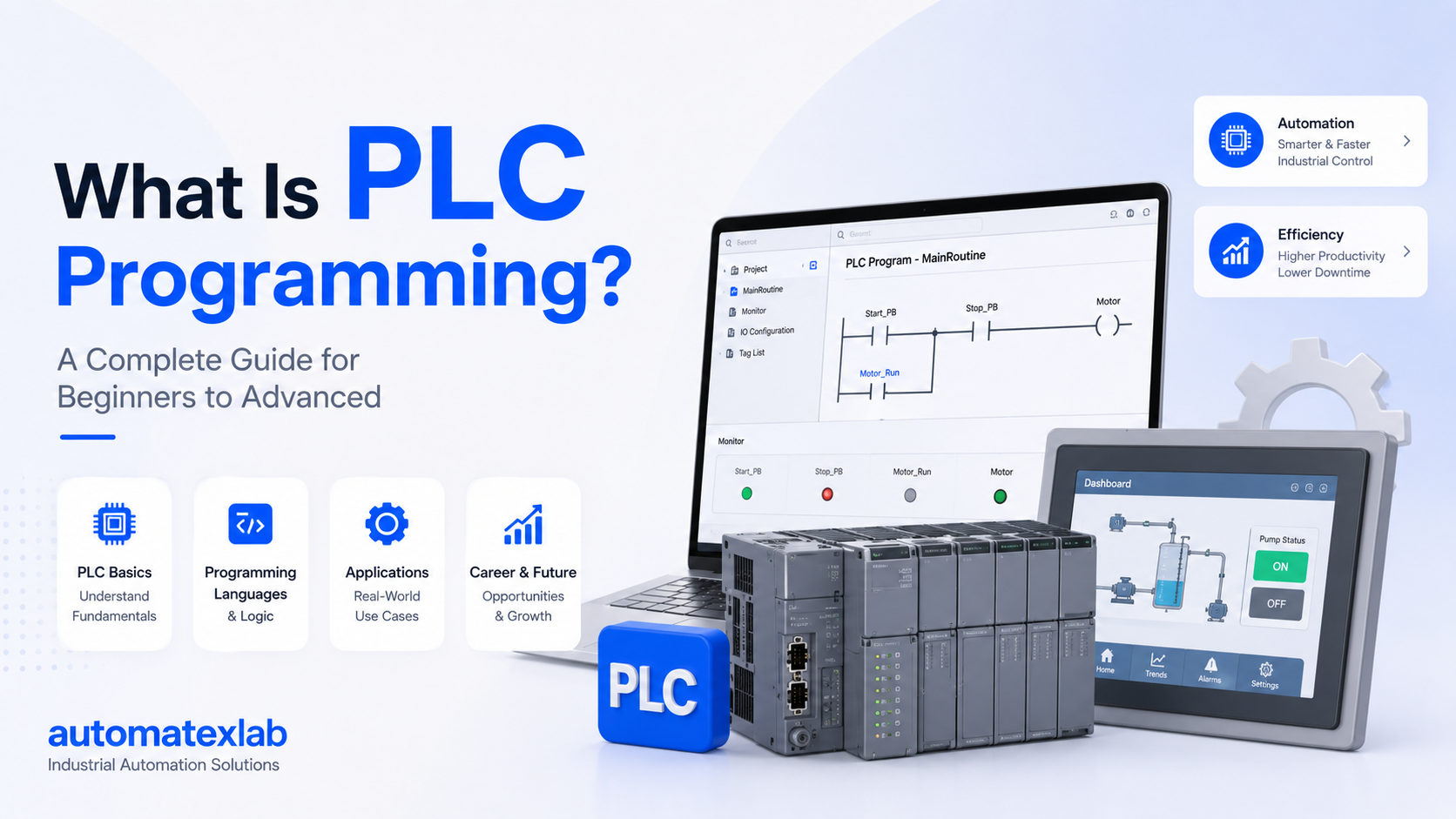
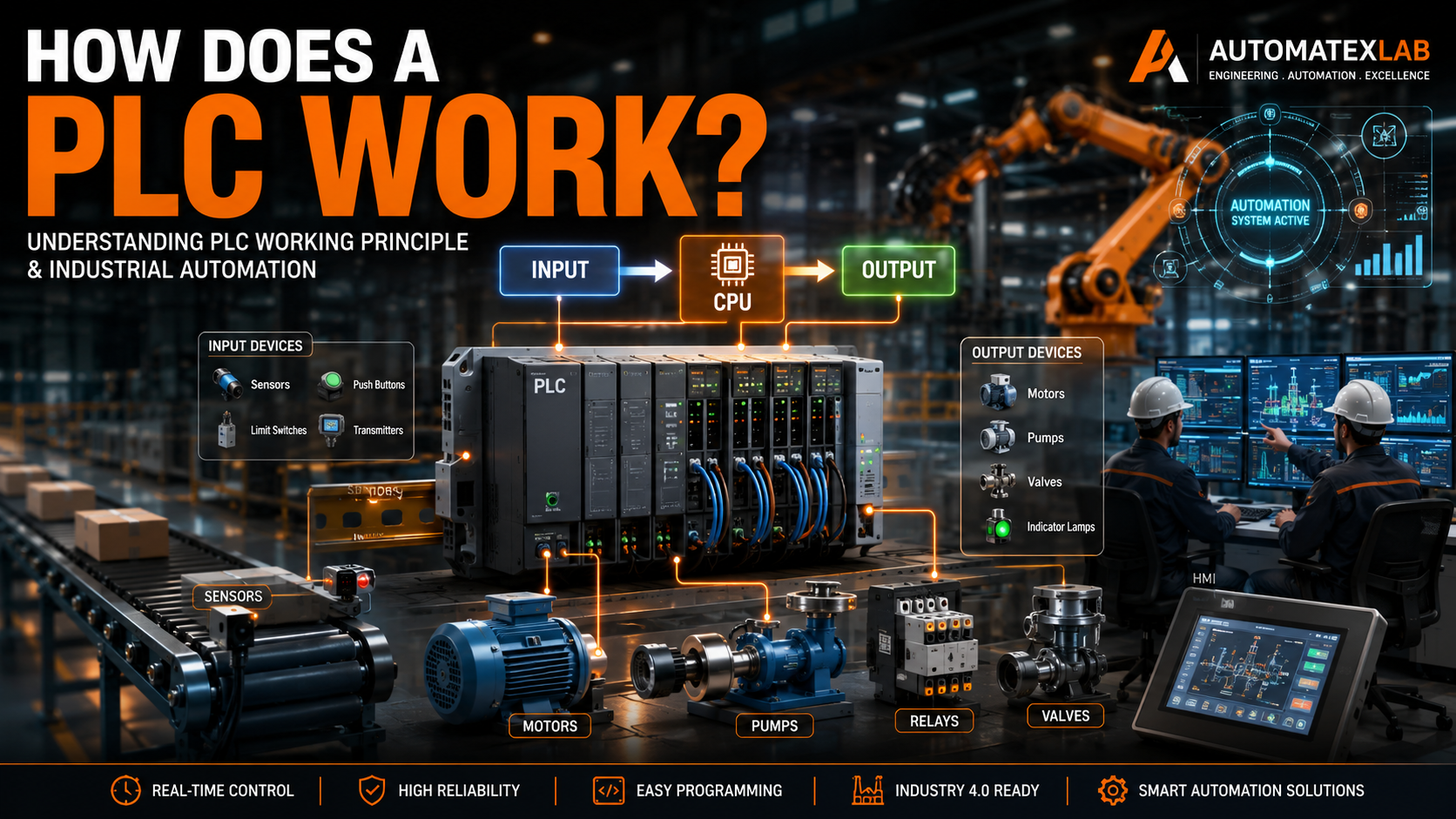
A Programmable Logic Controller (PLC) is a rugged, industrial-grade computer designed to automate machines and processes. It reads inputs from sensors, runs programmed logic, and triggers outputs like motors, valves, or conveyors. PLCs have been the backbone of factory automation for decades.
They’re built to survive harsh environments, vibration, heat, and electrical noise. That’s why they’re still everywhere.
How PLCs work:
- Sensors and switches send signals to the PLC input module
- The CPU processes the logic program in real time
- Output modules activate actuators, motors, or alarms based on the result
Core features of a PLC:
- Deterministic, cycle-based control
- Ladder logic programming
- Fast scan times (milliseconds)
- High reliability over long operational lifecycles
- Compact and rugged hardware design
Where PLCs Are Commonly Used
PLCs dominate in applications where control is repetitive and predictable. Common deployments include conveyor systems, packaging machines, motor control panels, and assembly line automation. They’re the go-to choice for small to medium manufacturing operations with fixed process requirements.
What PLCs Do Well
PLCs are low-cost, easy to maintain, and extremely stable. Maintenance teams can troubleshoot them without advanced engineering backgrounds. They handle dedicated machine control without any unnecessary complexity.
Where PLCs Fall Short in 2026
The limitations are becoming harder to ignore as factories modernize.
- Weak native support for IIoT connectivity
- Limited processing power for real-time analytics
- Difficult to scale across multi-machine or plant-wide systems
- Restricted compatibility with edge computing platforms
- Less flexibility in handling AI-driven automation requirements
What Is a PAC?
A Programmable Automation Controller (PAC) is an advanced industrial controller that combines the reliability of a traditional PLC with the processing capabilities of an industrial PC. PACs are designed to handle complex, multi-domain automation across an entire facility rather than just a single machine.
They emerged as factories needed more than simple on/off logic. PACs brought high-speed processing, multi-language programming, and deep network integration into a single industrial platform.
How PACs work:
- Handle multiple control domains simultaneously (motion, process, logic, safety)
- Run real-time operating systems with parallel processing
- Connect natively to enterprise networks, cloud platforms, and edge devices
- Support advanced data collection and analytics at the controller level
Core features of a PAC:
- High-speed multi-core processing
- Multi-tasking and multi-domain control
- Support for IEC 61131-3 languages plus C/C++ and Python integrations
- Built-in Ethernet/IP, OPC UA, and MQTT protocols
- Real-time data analytics and edge computing capability
Where PACs Are Commonly Used
PACs are the preferred choice in smart manufacturing environments. They’re widely deployed in automotive assembly plants, pharmaceutical production, semiconductor fabs, food and beverage processing, and anywhere robotics or vision systems are involved.
What PACs Do Well
PACs centralize control. Instead of managing ten separate PLCs on a production floor, a PAC-based architecture can coordinate all of them from a single platform while also feeding data to cloud dashboards and predictive maintenance systems.
Where PACs Fall Short
- Higher upfront hardware and software costs
- Requires engineers with advanced automation knowledge
- More complex configuration and commissioning
- Overkill for simple, standalone machine applications
PLC vs PAC: Core Differences
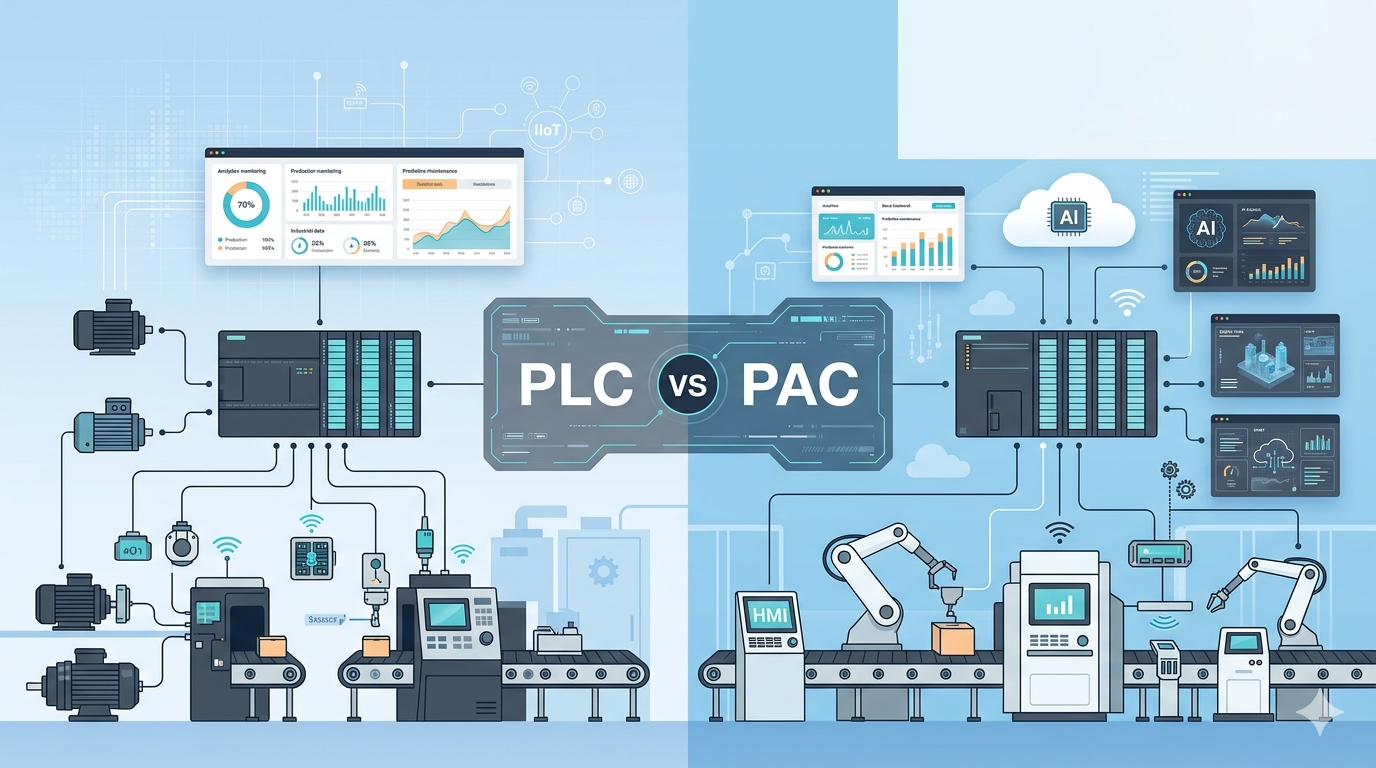
PACs are not just upgraded PLCs. The architecture is fundamentally different. A PLC controls a machine. A PAC controls a factory.
| Feature | PLC | PAC |
|---|---|---|
| Primary Use | Machine-level control | Plant-wide automation |
| Processing Power | Moderate | High |
| Programming Languages | Ladder Logic | Multi-language (ST, FBD, C, Python) |
| Scalability | Limited | High |
| Networking | Basic | Advanced (OPC UA, MQTT, Ethernet/IP) |
| Data Handling | Minimal | Extensive |
| IIoT Integration | Limited | Strong |
| Real-Time Analytics | Basic | Advanced |
| Cost | Lower | Higher |
| Best For | Repetitive machine tasks | Smart manufacturing |
The key difference comes down to scope. PLCs are purpose-built for specific machines. PACs are designed to operate across entire production environments and connect them to digital systems.
Why Modern Factories Are Moving Toward PACs in 2026
Industry 4.0 is the main driver. Factories need systems that don’t just control machines but also generate actionable data, support predictive maintenance, and integrate with enterprise software.
Industry Needs Are Outgrowing PLC Capabilities
Modern manufacturing demands connected systems. Plant managers need real-time production visibility from the shop floor to the cloud. Predictive maintenance requires continuous data streams from controllers. PLCs weren’t designed to deliver any of that at scale.
PACs handle it natively. They sit at the intersection of operational technology (OT) and information technology (IT), which is exactly where Industry 4.0 lives.
AI-Driven Automation Is Becoming Standard
Factories integrating AI for quality inspection, process optimization, and demand-driven production scheduling need controllers that can process and respond to that data in real time. PACs support the processing capacity and programming flexibility required for AI-driven control loops.
PLCs can participate in these systems but typically as edge nodes, not the intelligence layer.
Robotics and Vision Systems Need PAC-Level Control
Multi-axis robotics, collaborative robots, and vision-guided assembly systems require high-speed synchronized control across multiple axes and cameras simultaneously. PACs are built for that. A standard PLC struggles to handle that complexity without heavy add-on hardware.
Centralized Control Reduces Hardware Overhead
One of the clearest economic arguments for PACs is hardware consolidation. Many factories running dozens of PLCs for separate machines spend more on maintenance, licensing, and integration than a centralized PAC architecture would cost. One PAC platform managing multiple systems cuts engineering overhead significantly over time.
Industrial Cybersecurity Is Now a Requirement
Factories are increasingly targeted by cyberattacks. PACs support modern network security protocols, encrypted communications, role-based access control, and secure remote access management. Most legacy PLC platforms were never designed with cybersecurity as a priority.
Why PLCs Still Dominate Many Factories
PLCs aren’t going anywhere. In millions of plants around the world, they remain the most practical and cost-effective control solution.
Installed Base Is Massive
Factories already running Siemens S7, Allen-Bradley, or Mitsubishi PLC systems aren’t replacing them without a clear ROI justification. The installed industrial base of PLCs globally is enormous. Retrofitting costs, retraining maintenance teams, and replacing proven infrastructure is not a decision made lightly.
Reliability Matters More Than Features in Critical Operations
For a water treatment plant or a chemical reactor, uptime and predictability matter far more than data analytics. PLCs have a 40-year track record of running continuously for years without failure. That reputation carries real weight in industries where downtime means safety risks.
Maintenance Teams Know PLCs
Most factory technicians learned ladder logic, not structured text or C integrations. PLCs are easier to diagnose on the floor with handheld programming terminals. That practical advantage keeps PLCs as the first choice in facilities without large automation engineering departments.
Fixed Automation Is Still Everywhere
Not every manufacturing process needs to be smart. A packaging line running the same cycle for 20 years doesn’t need real-time analytics. PLCs handle fixed, repetitive automation with maximum simplicity and minimum cost.
Industries Choosing PACs Faster in 2026
Adoption of PAC platforms is accelerating in sectors where complexity, precision, and connectivity are non-negotiable.
Automotive Manufacturing
Automotive plants run large robotic cells, vision systems, torque tracking, and connected assembly lines. PAC platforms coordinate all of it while feeding data to manufacturing execution systems (MES) and quality management platforms.
Pharmaceutical Manufacturing
FDA and GMP compliance requires detailed batch records, audit trails, and process monitoring. PACs with integrated data logging and OPC UA connectivity make regulatory compliance significantly easier to manage and document.
Food and Beverage
Smart quality control, real-time production tracking, and recipe management across multi-line facilities benefit from PAC-level centralized control. Leading food manufacturers are replacing aging PLC architectures with PAC-based systems to support traceability requirements.
Semiconductor and Electronics
Precision process control, advanced motion systems, and clean room automation demand the processing power and multi-domain coordination that only PACs can deliver at scale.
Oil and Gas
Large-scale distributed control across pipelines, refineries, and offshore platforms relies on PAC architectures with robust networking and redundancy capabilities.
Industries Still Relying Heavily on PLCs
Small Manufacturing Units
Budget constraints and simpler process requirements make PLCs the clear choice for smaller operations. The investment in a full PAC platform simply doesn’t make economic sense at a smaller scale.
Water Treatment Plants
Stable, repetitive control of pumps, valves, and chemical dosing systems is exactly what PLCs were designed for. The reliability record speaks for itself.
Packaging Industries
Dedicated machine-level control with high-speed cycle requirements is PLC territory. Packaging OEMs continue building machines around PLC platforms because they’re proven, maintainable, and cost-effective.
Traditional Factories with Legacy Systems
Older plants running systems from the 1990s and 2000s depend on existing PLC infrastructure. Replacement requires capital investment, retraining, and process revalidation that many facilities defer as long as current systems remain operational.
PLC vs PAC in Industrial IoT
IIoT connectivity is where the gap between PLCs and PACs is most visible.
Connectivity Capabilities
| Protocol | PLC Support | PAC Support |
|---|---|---|
| Ethernet/IP | Available (often add-on) | Native |
| OPC UA | Limited/add-on modules | Native |
| MQTT | Rare/limited | Native |
| Cloud Integration | Requires middleware | Direct support |
| Edge Computing | Limited | Strong |
PLCs can connect to IIoT platforms, but it often requires additional hardware, middleware software, and significant engineering work. PACs connect natively and often include built-in edge computing modules.
Edge Computing Support
PACs can run analytics, machine learning inference, and process optimization logic directly at the controller level without sending data to a central server first. That reduces latency and keeps critical decisions local to the machine.
PLCs typically require a separate edge device or industrial PC to perform those functions, adding hardware cost and complexity.
Remote Monitoring
PAC platforms support centralized dashboards where engineers can monitor every connected machine, review real-time KPIs, and respond to alarms from anywhere. PLC remote monitoring is possible but usually requires additional SCADA software and hardware infrastructure to achieve the same result.
PLC vs PAC Programming Differences
PLC Programming
The dominant language for PLCs is Ladder Logic, a graphical programming language modeled after relay circuit diagrams. It’s intuitive for electricians and technicians, which is why it’s still widely used. Most PLC platforms also support the IEC 61131-3 languages including Function Block Diagram (FBD) and Structured Text (ST), but Ladder Logic remains the industry default.
PAC Programming
PACs are multi-language platforms by design. Engineers can write in Structured Text, Function Block Diagram, Instruction List, Ladder Logic, and many PAC platforms support high-level integrations with C, C++, and Python. This makes them far more versatile for complex motion algorithms, data processing routines, and AI integration.
Which Is Easier to Learn?
For maintenance technicians: PLCs win. Ladder Logic is approachable and widely understood by industrial electricians.
For automation engineers building complex systems: PACs provide more capability, but require stronger programming backgrounds and deeper knowledge of networking and software architecture.
Cost Comparison: PLC vs PAC
Initial Hardware Cost
Entry-level PLCs start in the range of a few hundred dollars. Mid-range industrial PAC platforms typically start several times higher, with full plant-wide deployments running significantly more. The hardware cost gap is real.
Engineering Cost
PLC projects are faster and cheaper to commission for simple applications. PAC projects require more engineering hours upfront, but that investment pays off as system complexity and scale increase.
Long-Term ROI
For large, complex facilities, PAC platforms often deliver better long-term ROI through:
- Reduced hardware count (one PAC replacing many PLCs)
- Lower downtime through predictive maintenance
- Faster troubleshooting via centralized diagnostics
- Better production data driving continuous improvement
Lifecycle Maintenance
PLC maintenance is straightforward and inexpensive. Spare parts are widely available and technicians are easy to find. PAC maintenance requires more specialized skills but the systems are designed for longer operational lifecycles with modular upgrades.
Top PLC Brands in 2026
Siemens remains the global leader with the S7 series, including the S7-1200 and S7-1500, which dominate European manufacturing.
Rockwell Automation with Allen-Bradley CompactLogix and ControlLogix platforms is the preferred choice across North American industry.
Mitsubishi Electric holds strong positions in Asia Pacific with the MELSEC iQ-R and FX series.
Omron competes strongly with the NX and NJ series, particularly in precision machine applications.
Schneider Electric serves process industries with the Modicon M340 and M580 platforms.
Top PAC Platforms in 2026
Beckhoff TwinCAT is widely regarded as the leading PAC platform globally, running on industrial PC hardware with a software-defined control architecture.
Emerson PACSystems (formerly GE Automation) remains a strong choice in process industries and large manufacturing environments.
B&R Automation X20 from ABB Group is a major player in automotive and packaging automation with strong motion control capabilities.
Bosch Rexroth ctrlX Automation is a newer platform gaining traction with its Linux-based open architecture and app-based control programming model.
Real Factory Examples
A Packaging Plant Using PLCs
A mid-size packaging operation running three production lines chose Allen-Bradley CompactLogix PLCs for each line. The machines run fixed cycles. Maintenance is handled by two in-house technicians familiar with ladder logic. Uptime exceeds 98%. No analytics integration was required. The PLC choice was correct for that environment, cost-effective, reliable, and simple to maintain.
A Smart Automotive Plant Using PACs
A Tier 1 automotive supplier building electric vehicle battery modules deployed Beckhoff TwinCAT PACs across its assembly plant. The system coordinates robotic welding cells, vision inspection stations, torque monitoring, and material tracking in real time. Data feeds into a cloud-based MES platform. Predictive maintenance reduced unplanned downtime by over 30% in the first year of operation.
A Hybrid PLC and PAC Architecture
The most common architecture emerging in 2026 is not pure PLC or pure PAC but a layered hybrid. Individual machines run PLCs for dedicated, high-speed machine control. A plant-level PAC aggregates data from all PLCs, handles analytics, coordinates production scheduling, and connects to enterprise systems. This approach protects existing PLC investments while enabling the connectivity benefits of PAC platforms at the plant level.
Will PAC Replace PLC Completely?
No. PAC adoption is accelerating, but PLCs will not disappear.
PLCs will continue to dominate at the machine level because they’re proven, inexpensive, and easy to maintain. The installed base alone ensures decades of continued use. PACs will increasingly take the plant-wide coordination and data integration role, sitting above PLCs in the automation hierarchy rather than replacing them.
The realistic future is layered: PLCs for machine control, PACs for plant coordination, and cloud platforms for enterprise analytics and AI applications.
How to Choose Between PLC and PAC
Choose a PLC if:
- You need dedicated control for a single machine or process
- Budget is a primary constraint
- Your existing infrastructure already runs PLCs
- The process is fixed and repetitive
- Your maintenance team is trained on ladder logic
- Networking and analytics requirements are minimal
Choose a PAC if:
- You need plant-wide or multi-machine coordination
- Real-time production data and analytics are required
- IIoT integration is part of your roadmap
- You’re deploying robotics, vision systems, or advanced motion control
- Digital transformation and Industry 4.0 readiness are strategic priorities
- Scalability matters for future expansion
Key Trends Shaping Factory Automation in 2026
AI-Powered Automation
AI is moving from the cloud to the factory floor. PAC platforms with built-in edge computing are now running machine learning inference directly in the controller, enabling real-time quality decisions and adaptive process control.
Edge Computing
Latency-sensitive applications can’t wait for cloud round-trips. Edge computing built into PAC platforms processes data locally and acts on it immediately. This is becoming standard in high-speed manufacturing.
Software-Defined Factories
Platforms like Beckhoff TwinCAT and Bosch ctrlX run control software on standard industrial hardware, separating software from hardware the way IT infrastructure evolved. This dramatically reduces vendor lock-in and speeds up system updates.
Digital Twins
PAC platforms now feed real-time data to digital twin models that mirror physical factory operations. Engineers simulate changes before implementing them, reducing commissioning time and process risk.
Predictive Maintenance
Vibration sensors, current monitoring, and thermal imaging data processed through PAC platforms are enabling maintenance teams to predict failures before they happen. This is one of the clearest ROI drivers for PAC adoption.
Unified Industrial Data Platforms
The convergence of OT and IT is driving demand for unified platforms that connect controllers directly to ERP, MES, and cloud analytics systems. PACs are the natural hub for this architecture.
Final Verdict
PLCs remain the most widely deployed industrial controllers in the world. They’re reliable, cost-effective, and exactly right for machine-level automation in fixed manufacturing environments. Nothing about that is changing in the near term.
PACs are becoming the preferred platform for factories pursuing smart manufacturing, real-time analytics, and connected production systems. Their adoption is accelerating across automotive, pharmaceutical, semiconductor, and food and beverage sectors where complexity demands more than traditional PLC architectures can deliver.
The real takeaway for 2026 is this: the choice is not always binary. Most modern factories are running hybrid architectures where PLCs and PACs each play a role they’re designed for. The shift is not from PLC to PAC. The shift is toward connected, scalable, data-driven industrial automation, and the right controller is the one that fits your application, your budget, and your long-term roadmap.
FAQs
It depends on your application. For simple, standalone machine control, a PLC is better because it’s lower cost and easier to maintain. For plant-wide automation with IIoT requirements, a PAC is the better platform.
Industry 4.0 requirements for real-time data, predictive maintenance, and connected systems are pushing factories toward PAC platforms that natively support those capabilities.
Not entirely. PLCs remain the preferred choice for machine-level control. PACs are increasingly taking the coordination and analytics layer above PLCs rather than replacing them at the machine level.
No. PLCs are still the dominant industrial controller globally. Modern PLCs from Siemens, Rockwell, and Omron have added IIoT features that extend their relevance. They’re not outdated, but they are increasingly limited in complex smart factory environments.
Yes, upfront. PAC hardware and engineering costs are higher. Long-term ROI can favor PACs in large, complex deployments through reduced downtime and hardware consolidation.
PACs are better aligned with Industry 4.0 requirements because of their native IIoT connectivity, data processing capability, and integration with cloud and AI platforms.
Yes, and most modern factories do exactly that. PLCs handle machine-level control while PACs manage plant-wide coordination and data integration. The hybrid architecture is the practical standard in 2026.