Industrial facilities run on precision. Every conveyor belt, filling line, mixing tank, and assembly robot depends on control logic that tells machines exactly what to do, when to do it, and how to respond when something goes wrong. PLC and PAC programming services are the foundation of that logic, and getting them right is the difference between a production floor that hums and one that constantly trips up.
AutomatexLab provides professional PLC and PAC programming services for manufacturers, plant operators, and industrial facilities that need reliable, scalable, and efficient control systems.
What Are PLC and PAC Programming Services?
PLC and PAC programming services involve designing, configuring, programming, and optimizing the industrial control systems that automate machines, production lines, and entire manufacturing processes.
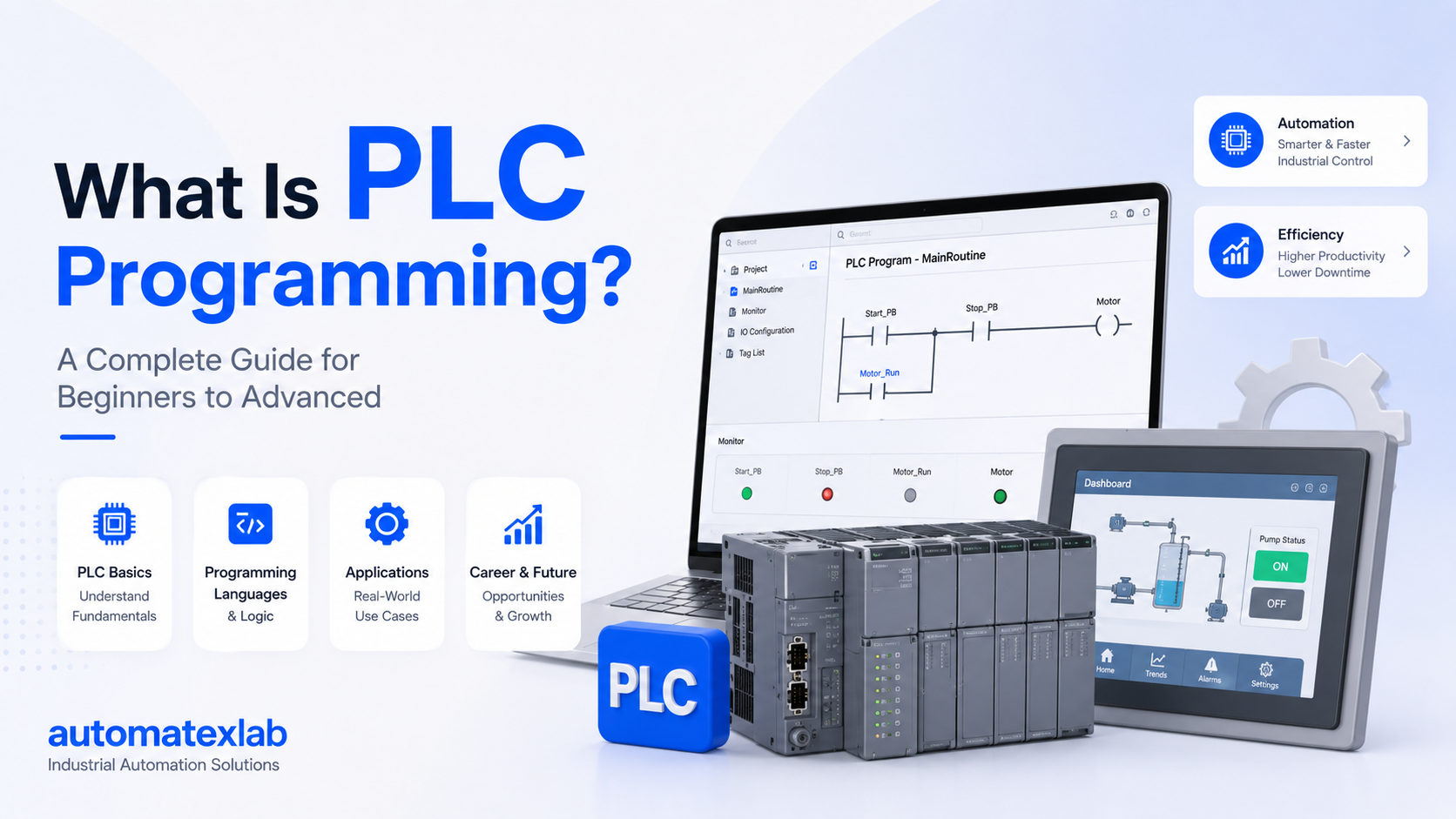
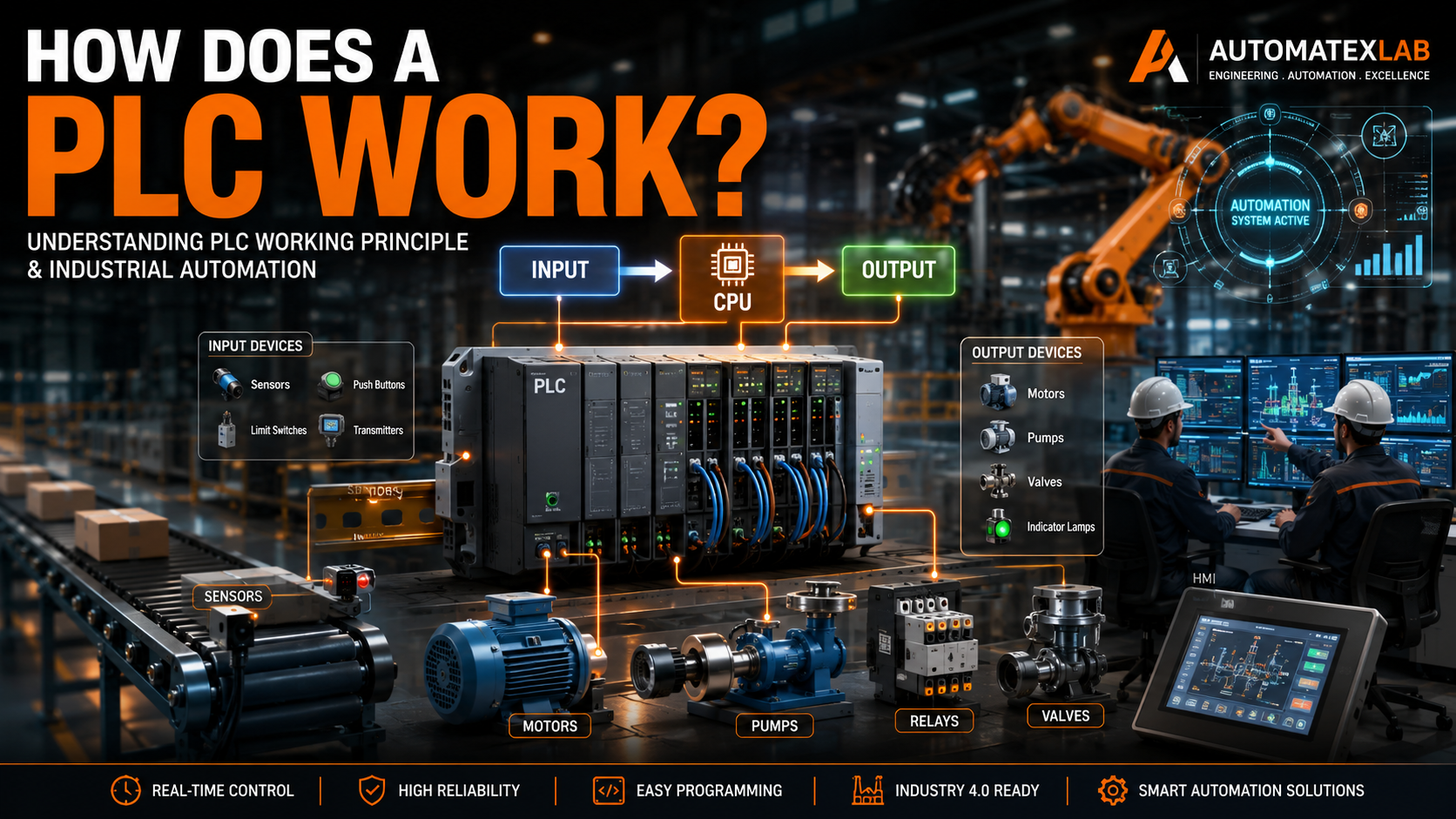
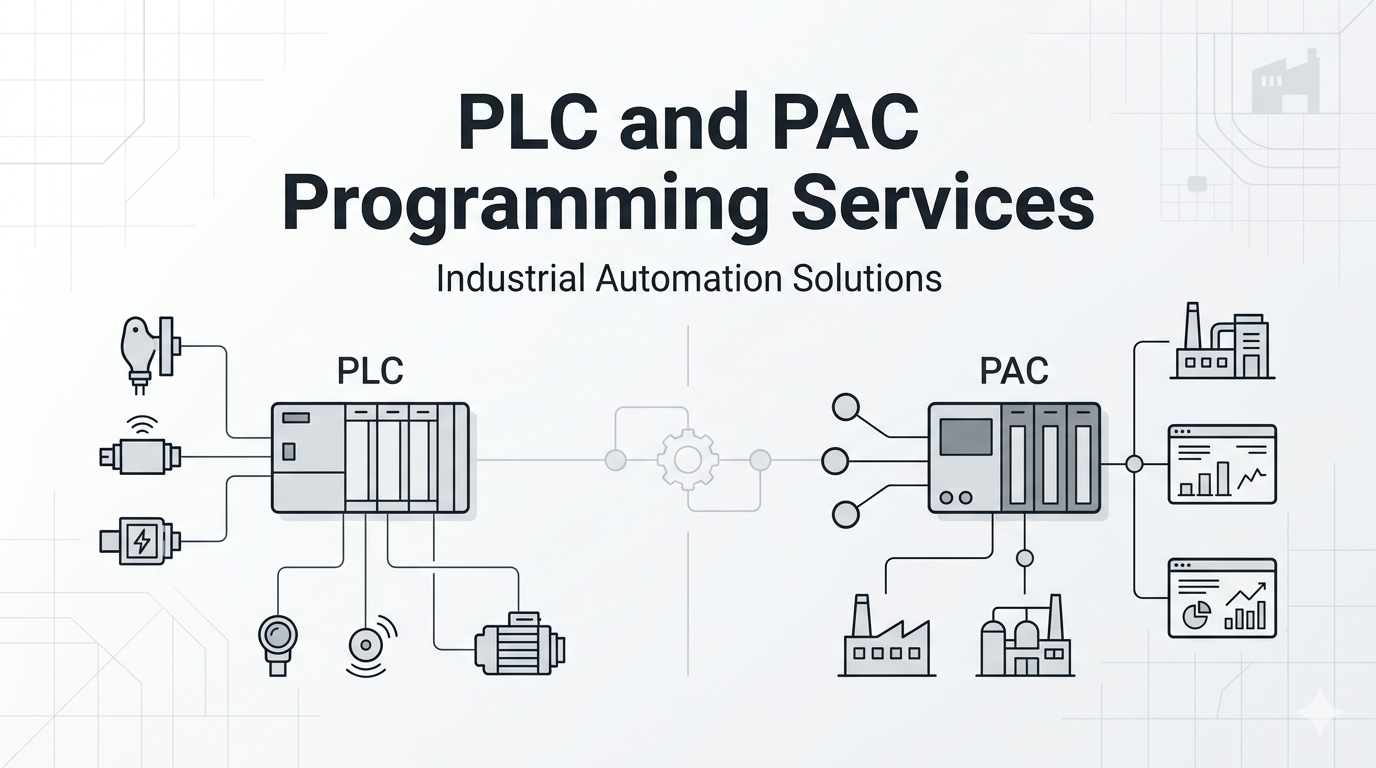
A Programmable Logic Controller (PLC) is a ruggedized digital computer used to control electromechanical processes. It reads inputs from sensors and switches, executes a logic program, and sends output signals to actuators, motors, and other field devices. PLCs have been the workhorse of factory automation for decades because they are reliable, fast, and straightforward to deploy on machine-level applications.
A Programmable Automation Controller (PAC) takes that concept further. PACs combine the reliability of PLCs with the computing power of PC-based systems. They handle more complex processes, manage larger datasets, support advanced communication protocols, and integrate more easily with enterprise software systems like SCADA, MES, and ERP platforms.
Industries use these systems because manual operation of modern production equipment is simply not practical at scale. Automated control reduces human error, maintains consistent process parameters, enables fast response to fault conditions, and allows one operator to oversee processes that would otherwise require entire teams.
Common automation applications include bottling and packaging lines, chemical dosing and mixing, conveyor and material handling systems, water treatment and pumping stations, CNC machine control, automotive assembly, and pharmaceutical batch processing.
PLC vs PAC: What Is the Difference?
PLCs are ideal for machine-level control, while PACs are designed for larger, more complex industrial automation systems that require advanced processing and connectivity.
Both technologies automate industrial processes, but they suit different scales and levels of complexity. Here is a direct comparison:
| Feature | PLC | PAC |
|---|---|---|
| Complexity | Low to Medium | Medium to High |
| Data Processing | Basic | Advanced |
| Connectivity | Limited | Extensive |
| Scalability | Moderate | High |
| Best For | Individual Machines | Entire Plants |
| Programming | Ladder Logic, FBD | Multiple languages, scripting |
| Integration | Basic I/O | Enterprise systems, databases |
For a standalone packaging machine or a simple conveyor control application, a PLC is usually the right choice. For a multi-zone process plant, a facility with hundreds of I/O points, or a system that needs to talk to business intelligence software, a PAC is typically the better fit.
Choosing incorrectly costs money. Over-engineering a simple machine with a PAC adds unnecessary cost. Under-specifying a complex process with a basic PLC creates bottlenecks, communication gaps, and upgrade headaches down the line. AutomatexLab helps clients select the right architecture before a single line of code is written.
Why Businesses Need Professional PLC and PAC Programming Services
Professional PLC and PAC programming improves production efficiency, reduces downtime, enhances safety, and ensures reliable long-term operation.
Control system programming is not a task that benefits from shortcuts. Poorly written logic creates race conditions, unexpected faults, and safety risks that take months to fully surface. Here is what professional programming services deliver:
Reduced Downtime Well-structured control logic includes fault detection, alarm management, and clear diagnostic messaging. When something does go wrong, operators and technicians can identify the root cause quickly rather than spending hours chasing a symptom.
Improved Production Efficiency Optimized sequencing, tight timing control, and properly tuned PID loops keep production running at rated speed without unnecessary pauses, rejects, or rework cycles.
Better Process Control Whether it is temperature, pressure, flow, or position, professionally programmed controllers maintain tighter tolerances than manual operation, which translates directly into product quality and consistency.
Enhanced Operator Safety Safety interlocks, emergency stop logic, and machine guarding sequences need to be correct by design. Professional programming ensures that safety functions behave reliably and comply with applicable standards.
Easier Future Expansion Modular, well-documented code can be extended when production requirements change. Spaghetti logic written by someone unfamiliar with software architecture becomes a liability the moment you need to add a new station or product variant.
Industries We Serve
AutomatexLab works with industrial clients across a wide range of sectors where automated control is critical to operations.
Manufacturing requires precise machine sequencing, production counting, and integration with upstream and downstream equipment. We program control systems for discrete and continuous manufacturing environments.
Food and Beverage operations run under strict hygiene standards and require control systems that manage recipes, batch records, CIP cycles, and temperature monitoring with full traceability.
Water and Wastewater facilities depend on reliable pump control, dosing automation, level management, and remote monitoring to operate safely with minimal staffing.
Automotive plants use highly synchronized control across assembly cells, robotic workcells, and test stations. Precision and cycle time are non-negotiable.
Chemical Processing involves hazardous materials, complex reaction sequences, and strict process boundaries. Control logic in these environments must be robust, well-tested, and properly interlocked.
Pharmaceutical manufacturing operates under regulatory scrutiny. Batch control, audit trails, electronic records, and validation support are all part of what we deliver in this sector.
Material Handling systems including sortation, conveyor networks, and warehouse automation require high-speed logic with real-time decision-making and integration with warehouse management systems.
Energy and Utilities operations use automated control for generation, distribution, and monitoring. We support both conventional and renewable energy automation projects.
Our PLC Programming Services
PLC Logic Development From blank slate to fully commissioned program, we develop PLC logic that matches your process requirements, hardware configuration, and operational needs. We work in Ladder Diagram, Function Block Diagram, Structured Text, and Instruction List depending on the application and platform.
PLC Migration and Upgrades Legacy systems running on obsolete hardware or unsupported software create real business risk. We migrate programs from older platforms to modern controllers while preserving your process knowledge and minimizing downtime during cutover.
PLC Troubleshooting Intermittent faults, nuisance trips, and unexplained production losses often trace back to control logic issues. Our engineers dig into existing programs to find the root cause and implement a lasting fix, not a workaround.
PLC Optimization An aging program that was written for different production conditions may be holding your line back. We review and optimize existing logic for better performance, faster cycle times, and improved fault handling.
Machine Automation Programming Individual machines, from injection molding equipment to CNC machining centers to robotic cells, need programming that matches their mechanical design and production intent. We develop machine-level automation programs that integrate smoothly with broader plant systems.
Production Line Automation Coordinating multiple machines across a production line requires a systems perspective. We program line control logic that manages sequencing, material flow, reject handling, and production tracking across the full line.
Our PAC Programming Services
Advanced Process Automation For complex, multi-variable processes that go beyond simple on/off or PID control, we develop PAC programs using advanced control strategies that maintain tighter process performance across a wider range of operating conditions.
Multi-System Integration PACs are designed to connect with other systems. We program inter-system communication across multiple controllers, field devices, and plant subsystems using industrial protocols including EtherNet/IP, Profibus, Modbus, and OPC UA.
Data Collection and Analytics Modern PAC platforms can log, timestamp, and transmit large volumes of process data. We configure data collection routines that feed historian systems, dashboards, and analytics platforms without impacting control performance.
Industrial Networking We design and implement the communication architecture that supports PAC-based systems, including network segmentation, redundancy, and cybersecurity considerations appropriate for industrial environments.
Enterprise System Integration Connecting plant floor control to MES, ERP, and quality management systems requires careful data mapping and protocol translation. We handle the integration between the control layer and your business systems so that production data flows reliably in both directions.
PLC and PAC Platforms We Work With
AutomatexLab programs across the major industrial control platforms in use today. Our engineers hold practical experience with real-world deployments, not just certification courses.
Siemens S7 Series including S7-300, S7-400, S7-1200, and S7-1500 using TIA Portal and STEP 7. We work with both standard and safety-rated CPU variants.
Rockwell Automation Allen-Bradley including MicroLogix, CompactLogix, ControlLogix, and GuardLogix using Studio 5000 Logix Designer and RSLogix.
Schneider Electric Modicon including M221, M241, M340, M580, and Premium platforms using EcoStruxure Machine Expert and Unity Pro.
Mitsubishi Electric PLC Systems including MELSEC iQ-R, iQ-F, Q Series, and FX Series using GX Works and Melsoft tools.
Omron Controllers including NJ, NX, CP1, and CJ series using Sysmac Studio.
Beckhoff Automation Systems using TwinCAT 3 with IEC 61131-3 programming languages and PC-based control architecture.
If your facility runs a platform not listed here, contact us directly. Our team has exposure to a broad range of controllers and can assess unfamiliar platforms quickly.
Our PLC and PAC Development Process
Every AutomatexLab project follows a structured development process that reduces risk, keeps the project on schedule, and delivers a system you can depend on.
1. Requirement Analysis We begin by understanding your process, your production goals, your existing hardware, and the constraints you are working within. This stage produces a functional specification that both parties agree on before design begins.
2. Control System Design Based on the requirements, we develop the control architecture, I/O mapping, network topology, and software structure. We select the right programming approach for your platform and process type.
3. Programming and Simulation We write and internally test the control logic in simulation where possible before it touches real hardware. Simulation catches logic errors early, before they become commissioning delays.
4. Testing and Validation Control programs are tested against the functional specification using documented test procedures. For regulated industries, we support formal validation protocols including FAT (Factory Acceptance Testing).
5. Commissioning We deploy the program to the actual hardware, connect to field devices, and verify operation under real conditions. We work methodically through each function to confirm correct behavior before handover.
6. Ongoing Support Production environments change. Equipment gets added, products change, and faults occur. AutomatexLab provides ongoing remote and on-site support to keep your control systems performing as your operation evolves.
Signs Your Existing Control System Needs an Upgrade
Many facilities operate on control systems that were adequate when they were installed but are now holding the business back. Here are the signs that it is time to modernize:
Frequent production stoppages that your maintenance team struggles to diagnose because the system provides little useful fault information.
Difficult troubleshooting caused by undocumented programs, deleted comments, or logic written by someone who left the business years ago.
Obsolete hardware where replacement parts are no longer available from the manufacturer or require sourcing through secondary markets at unpredictable cost.
Poor system visibility meaning operators cannot see what the system is actually doing without walking the floor, because there is no HMI or the existing one is inadequate.
Increasing maintenance costs as aging hardware fails more frequently and takes longer to repair.
Lack of remote monitoring which means faults require physical presence to diagnose and respond to, even for issues that could be resolved remotely.
If your facility is experiencing two or more of these conditions, the cost of staying on the current system is almost certainly exceeding the cost of upgrading it.
Why Choose AutomatexLab for PLC and PAC Programming Services?
Industrial Automation Expertise Our engineers have hands-on experience across a wide range of industries and control platforms. We understand that industrial automation projects carry real consequences, and we approach every project with the discipline that reflects that.
Vendor-Neutral Approach We are not tied to any single hardware manufacturer. Our recommendations are based on what fits your application, your budget, and your long-term operational goals, not on which platform we have a commercial relationship with.
Remote and On-Site Support Many control system issues can be diagnosed and resolved remotely, reducing your downtime without waiting for an engineer to travel to site. When physical presence is required, we provide on-site support to get your system back on track.
Scalable Automation Solutions We design systems with growth in mind. The programs we write today are structured to accommodate new equipment, new products, and new production targets without requiring a full rewrite.
Documentation and Training Every system we deliver comes with clear documentation. We also provide operator and maintenance training so your team understands how to work with the system confidently.
Long-Term Support AutomatexLab is not a project-only firm. We build relationships with clients and provide ongoing support as production requirements change and systems need to evolve.
PLC and PAC Programming Case Studies
Packaging Line Automation A consumer goods manufacturer was experiencing consistent cycle time variability on their primary packaging line due to outdated PLC logic written over multiple generations of modifications. AutomatexLab conducted a full logic audit, rewrote the sequencing program in structured modules, and reduced average cycle time by 14% while eliminating the most common recurring fault conditions.
Water Treatment Control Upgrade A regional water authority was operating treatment plant controls on a platform that had reached end of life. AutomatexLab migrated the existing SCADA and PLC programs to a current-generation platform with minimal process interruption, added remote monitoring capability, and improved alarm management to reduce nuisance trips.
Manufacturing Process Optimization A metal fabrication facility was running a multi-stage process with manual operator interventions between stages due to poor inter-machine communication. AutomatexLab programmed a coordination layer that automated the handoffs between stages, reducing manual touchpoints and improving throughput by 22%.
Ready to Automate Your Industrial Processes?
Whether you need PLC programming, PAC development, system upgrades, troubleshooting, or complete factory automation, AutomatexLab helps manufacturers build reliable, scalable, and efficient control systems that perform day after day.
Get a Free Automation Consultation
Discuss your project requirements with an AutomatexLab’s automation engineer. We will assess your current situation, identify the right approach, and give you a clear picture of what a professionally delivered control system can do for your operation.
Discuss Your PLC/PAC Project with an Automation Engineer
FAQs
A PLC is best suited for machine-level control applications where the logic requirements are straightforward and the I/O count is manageable. A PAC is designed for more complex systems that need advanced processing power, extensive connectivity, and integration with enterprise software. The right choice depends on the scale and complexity of your application.
Project cost depends on the complexity of the application, the number of I/O points, the control platform, and the scope of work including commissioning and documentation. AutomatexLab provides detailed project estimates after an initial consultation where we understand your specific requirements.
Yes. Migration from legacy platforms is one of our core service areas. We can move programs from obsolete hardware to modern controllers while preserving your process logic and minimizing production disruption during the transition.
Yes. We provide remote diagnostics and support for clients whose systems have remote access capability. For clients without existing remote access, we can assess and implement secure remote connectivity as part of a support agreement.
We work with Siemens, Rockwell Automation Allen-Bradley, Schneider Electric Modicon, Mitsubishi Electric, Omron, and Beckhoff, among others. If you are running a platform not listed, reach out and we can discuss our experience with your specific hardware.
A straightforward machine-level automation project may take two to four weeks from design to commissioning. A more complex multi-system integration project could take several months. Timeline depends on scope, hardware availability, site access, and testing requirements. We provide realistic schedules during the proposal stage.