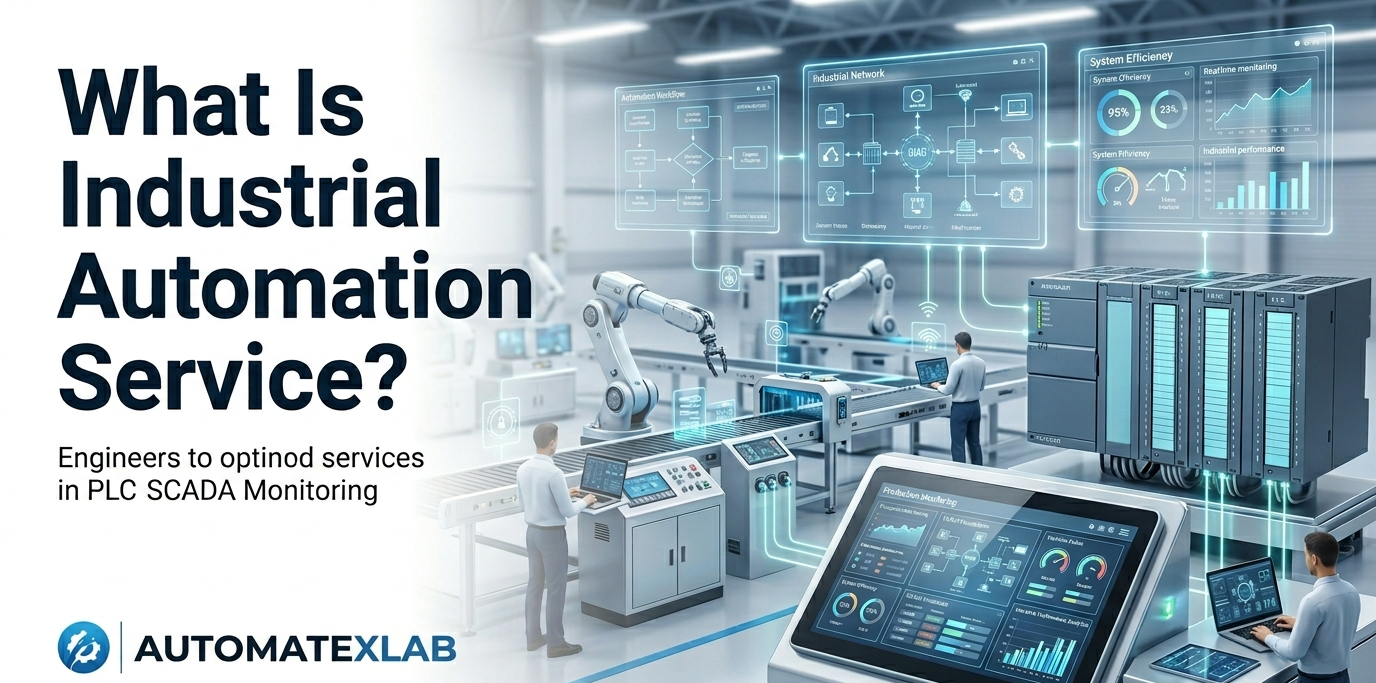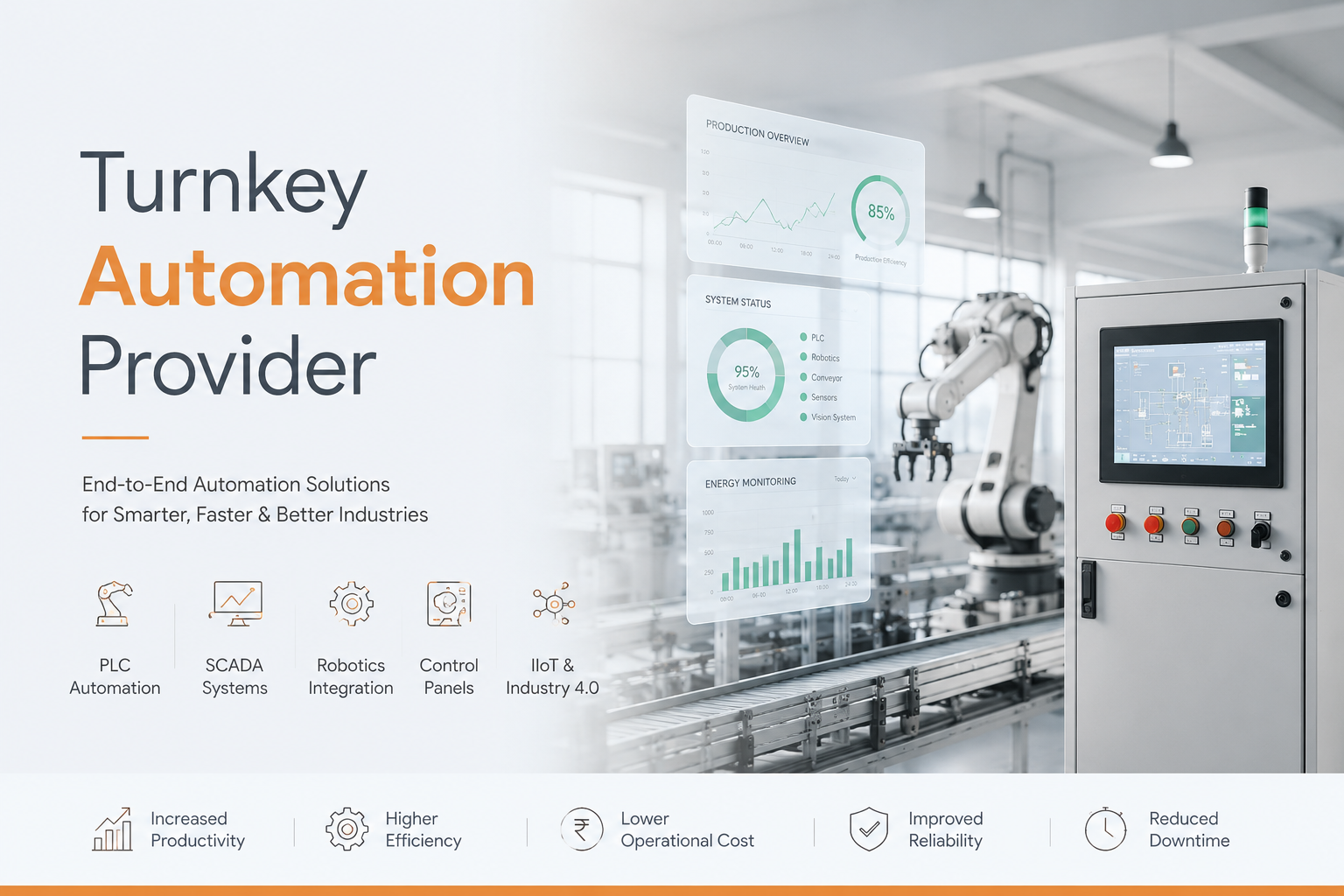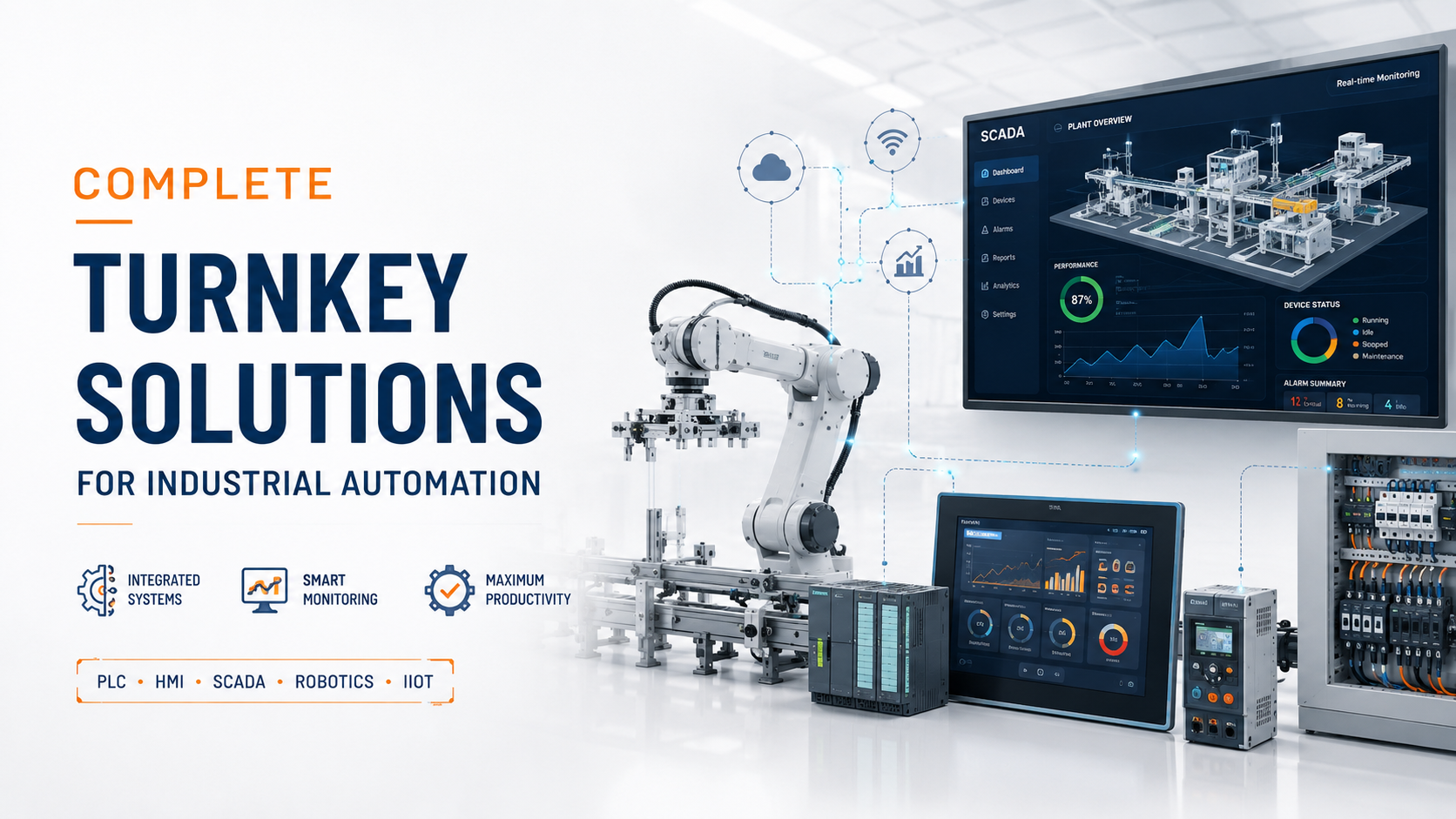
Complete turnkey industrial automation solutions help factories automate their operations through a single integrated provider handling design, programming, installation, commissioning, and support.
The manufacturing landscape is evolving rapidly. Smart factories are no longer a distant vision but a present-day necessity. Yet many industries struggle with fragmented automation projects involving multiple vendors, miscommunication, compatibility issues, and extended timelines. The result? Delayed deployments, budget overruns, and systems that fail to deliver promised efficiency gains.
This is where complete turnkey solutions change the game. By consolidating the entire automation journey under one expert provider, industries can achieve faster execution, better integration, and measurable ROI. AutomateXLab specializes in delivering these comprehensive automation solutions, transforming traditional factories into intelligent, connected operations ready for Industry 4.0.
What Are Complete Turnkey Solutions in Industrial Automation?
A turnkey industrial automation solution is a complete end-to-end automation service where one company manages the entire automation project from planning to final deployment and maintenance.
Think of it as hiring a single architect, contractor, and maintenance team for building your dream home, rather than coordinating with dozens of separate specialists. The “turnkey” concept means you hand over your requirements and receive a fully operational system ready to switch on and use.
What’s Included in a Complete Turnkey Solution?
Requirement Analysis
Engineers assess your current processes, identify bottlenecks, and define automation objectives aligned with your business goals.
PLC Programming
Custom logic programs control your machines, processes, and production sequences with precision and reliability.
SCADA Integration
Supervisory control systems provide centralized monitoring, data collection, and remote access to your entire operation.
HMI Development
Intuitive visual interfaces allow operators to monitor equipment status, receive alerts, and control processes effortlessly.
Electrical Panel Design
Complete control panel engineering ensures safe power distribution, proper component sizing, and compliance with electrical standards.
Sensor Integration
Temperature, pressure, flow, level, and proximity sensors feed real-time data into your automation system for accurate control.
Installation & Commissioning
Professional on-site installation, system integration, testing, and validation ensure everything works as designed before handover.
Ongoing Support
Post-deployment technical assistance, troubleshooting, system optimization, and maintenance keep your operations running smoothly.
Comparison: Turnkey vs Multiple Vendors
| Aspect | Turnkey Solution | Multiple Vendors |
|---|---|---|
| Point of Contact | Single provider | Multiple coordinations |
| Project Timeline | Faster execution | Frequent delays |
| System Integration | Seamless compatibility | Integration challenges |
| Accountability | Clear responsibility | Blame-shifting |
| Support | Unified assistance | Fragmented help |
| Cost Predictability | Fixed budget | Hidden expenses |
Why Are Industries Choosing Turnkey Automation Solutions?
Industries choose turnkey automation solutions because they reduce downtime, improve efficiency, simplify integration, and accelerate project completion.
The shift toward single-provider automation isn’t just a trend. It’s a strategic response to the complexities of modern manufacturing. Here’s why forward-thinking industries are making this choice.
Faster Project Execution
Turnkey automation projects are completed faster because all engineering, programming, and deployment activities are managed under one team.
When everyone works under the same roof, magic happens. Design decisions don’t wait weeks for vendor approvals. Programming adjustments happen in real-time. Installation teams know exactly what the engineers intended because they’re part of the same organization.
Key advantages:
- Centralized communication eliminates information silos
- Faster decision-making without lengthy approval chains
- Reduced delays from vendor coordination issues
- Parallel workflows instead of sequential handoffs
Better System Integration
Integrated automation systems allow PLCs, HMIs, SCADA systems, drives, and sensors to communicate efficiently without compatibility problems.
Imagine trying to run a symphony orchestra where each musician speaks a different language. That’s what happens with multi-vendor automation systems. Protocols don’t match. Data formats conflict. Updates break existing integrations.
Turnkey providers design every component to work together harmoniously. They test communication protocols thoroughly. They ensure data flows smoothly from field sensors to cloud analytics platforms without translation errors or bottlenecks.
Reduced Operational Downtime
A unified automation architecture helps industries reduce machine failures and improve troubleshooting speed.
When something goes wrong at 2 AM, you don’t want to figure out whether it’s a PLC issue, a SCADA problem, or a sensor malfunction, then call three different vendors who each blame the other two.
With turnkey solutions, one expert team understands your entire system. They diagnose problems faster, access complete documentation easily, and fix issues without finger-pointing. Preventive maintenance becomes simpler because the provider knows every component’s history and performance patterns.
Improved ROI
Industrial automation improves ROI by reducing manual labor, minimizing errors, increasing production speed, and lowering maintenance costs.
The financial case for turnkey automation is compelling. Direct labor costs drop as machines handle repetitive tasks. Production quality improves dramatically when automated controls eliminate human error. Throughput increases as optimized processes run faster and more consistently.
But the real ROI advantage comes from hidden savings: fewer integration consultants, reduced troubleshooting time, lower inventory from better production planning, decreased energy consumption from optimized operations, and extended equipment life from proper maintenance.
Which Industries Need Complete Industrial Automation Solutions?
Industries with complex manufacturing, monitoring, or production processes benefit the most from turnkey automation solutions.
While virtually any industry can benefit from automation, certain sectors see transformational results from complete turnkey approaches.
Manufacturing Industry
Manufacturing plants use automation to improve productivity, reduce downtime, and increase production consistency.
From discrete manufacturing to continuous process industries, automation transforms production floors. Assembly lines run faster with robotic assistance. Quality control becomes more reliable with vision systems and automated testing. Material handling flows seamlessly from raw materials to finished goods.
Turnkey solutions excel in manufacturing because they handle the entire ecosystem: machine control, process monitoring, inventory management, quality assurance, and production planning in one integrated system.
Food & Beverage Industry
Food industries use industrial automation for hygienic production, batch control, packaging automation, and quality monitoring.
Food processing demands strict hygiene standards, precise recipe control, and complete traceability. Automation systems must handle washdown environments, maintain temperature controls, track batch genealogy, and comply with food safety regulations.
Turnkey providers design systems specifically for food-grade requirements: stainless steel enclosures, IP69K ratings, sanitary sensors, automated cleaning-in-place sequences, and complete audit trail documentation.
Pharmaceutical Industry
Pharmaceutical companies use automation systems for precision manufacturing, compliance, and real-time monitoring.
Perhaps no industry faces stricter regulatory requirements than pharmaceuticals. Every process parameter must be monitored, recorded, and validated. Batch records must be tamper-proof. Environmental conditions require continuous control.
Turnkey automation in pharma includes validated systems meeting FDA 21 CFR Part 11 requirements, automated documentation, electronic batch records, environmental monitoring systems, and complete qualification packages (IQ/OQ/PQ).
Automotive Industry
Automotive plants use robotics, PLC systems, and motion control for assembly line optimization and quality control.
Modern automotive manufacturing represents the pinnacle of industrial automation. Body shops employ hundreds of robots. Paint systems require precise environmental control. Assembly lines coordinate thousands of parts arriving in perfect sequence.
Turnkey providers deliver complete solutions spanning robotic welding cells, automated guided vehicles, vision-guided assembly, torque monitoring systems, and synchronized production lines producing vehicles with near-zero defects.
What Services Are Included in Turnkey Industrial Automation?
Complete turnkey automation services include PLC programming, HMI development, SCADA integration, electrical panel design, Industrial IoT integration, and commissioning support.
Let’s explore each service component in detail.
PLC Programming Services
PLC programming controls industrial machines and processes through automated logic systems.
Programmable Logic Controllers form the brain of modern automation. They execute control logic, manage safety interlocks, coordinate machine sequences, and respond to sensor inputs in milliseconds.
Platforms we specialize in:
- Siemens PLC: TIA Portal, S7-1200, S7-1500 series for robust industrial control
- Allen-Bradley PLC: Studio 5000, CompactLogix, ControlLogix for North American markets
- Mitsubishi PLC: GX Works, FX5 series for Asian manufacturing standards
- Delta PLC: DVP series for cost-effective automation solutions
- Schneider PLC: EcoStruxure, Modicon M580 for process automation
HMI Development Services
HMI software helps operators monitor and control industrial machines through visual dashboards and real-time alerts.
Human-Machine Interfaces bridge the gap between complex automation systems and human operators. Good HMI design presents critical information clearly, enables quick operator response, and prevents costly mistakes through intuitive controls.
Our HMI development includes animated process graphics, trending and historical data display, alarm management with prioritization, recipe management for product changeovers, security levels for operator access, and mobile-responsive designs for remote monitoring.
SCADA Integration
SCADA systems provide centralized industrial monitoring, remote access, and real-time process visualization.
Supervisory Control and Data Acquisition systems give you the big picture. While PLCs handle local control, SCADA aggregates data across multiple machines, production lines, or even facilities, providing enterprise-wide visibility.
SCADA integration includes multi-site data collection, cloud connectivity for remote access, historical trending and reporting, production KPI dashboards, predictive maintenance alerts, and integration with ERP and MES systems.
Industrial IoT Solutions
Industrial IoT connects machines, sensors, and systems for real-time analytics, predictive maintenance, and remote monitoring.
The Industrial Internet of Things extends automation beyond the factory floor. Sensors communicate wirelessly. Edge computers process data locally. Cloud platforms provide advanced analytics. Mobile apps deliver insights anywhere.
Our IIoT solutions feature wireless sensor networks, edge computing for local processing, cloud-based analytics platforms, predictive maintenance algorithms, energy monitoring and optimization, and mobile apps for technicians and managers.
Electrical Control Panel Design
Industrial control panels manage electrical distribution, automation controls, and machine safety systems.
Great automation starts with great electrical engineering. Control panels house PLCs, drives, relays, circuit breakers, and terminal blocks in organized, maintainable configurations meeting electrical codes and safety standards.
We provide complete panel design including electrical schematics and CAD drawings, component selection and sizing, thermal management planning, UL/CE compliance certification, on-site installation and testing, and comprehensive documentation for maintenance teams.
How Does a Turnkey Automation Project Work?
A turnkey industrial automation project follows a structured process including planning, design, programming, integration, testing, commissioning, and support.
Understanding the project lifecycle helps set realistic expectations and ensures smooth execution. Here’s how professional automation projects unfold.
Step 1: Requirement Analysis
Automation engineers analyze existing operations, production challenges, and automation goals before designing the system.
This discovery phase is critical. Engineers visit your facility, observe current operations, interview operators and maintenance staff, review production data, identify pain points, and document technical requirements.
Deliverables include detailed requirement specifications, scope definition with clear boundaries, preliminary ROI calculations, project timeline estimates, and risk assessment identifying potential challenges.
Step 2: System Design
The automation architecture is designed based on process requirements, machine communication, and scalability needs.
With requirements clear, engineers create the system blueprint. They select appropriate PLC platforms, design control architecture, plan network topology, specify sensors and actuators, design HMI layouts, and create SCADA architectures.
Design review sessions ensure alignment with your team before moving to development. Changes during design cost little; changes during installation cost significantly more.
Step 3: Programming & Development
PLC logic, SCADA dashboards, and HMI interfaces are developed during the software engineering phase.
Programmers develop control logic following industry best practices. Code is modular for easy maintenance. Comments explain complex logic. Standard function blocks ensure reliability. Safety interlocks prevent dangerous conditions.
Parallel to PLC programming, HMI developers create operator screens and SCADA engineers build supervisory dashboards. Integration engineers prepare communication protocols. Everything happens simultaneously to compress timelines.
Step 4: Installation & Integration
Automation hardware, sensors, control panels, and software systems are installed and integrated on-site.
Installation teams arrive with pre-tested panels, calibrated sensors, and debugged software. They mount equipment, pull cables, terminate connections, power up systems, and verify communications.
Integration follows a systematic approach: individual device testing first, then subsystem integration, followed by complete system integration. Each layer is validated before proceeding to the next.
Step 5: Testing & Commissioning
Engineers test the automation system to ensure stable operation, safety compliance, and production efficiency.
Commissioning is where theory meets reality. Engineers run comprehensive tests: normal operation scenarios, emergency shutdown procedures, alarm response verification, production rate validation, quality checks, and operator training sessions.
Documentation packages include final drawings reflecting as-built conditions, operation manuals for daily use, maintenance procedures for technical staff, training materials for operators, and acceptance test results proving system performance.
Step 6: Support & Maintenance
Post-deployment support helps industries maintain uptime, troubleshoot issues, and optimize performance.
Our relationship doesn’t end at commissioning. We provide ongoing technical support via phone and remote access, scheduled preventive maintenance visits, spare parts management, software updates and improvements, performance optimization reviews, and operator refresher training.
Common Industrial Problems Solved by Automation
Industrial automation solves problems like manual errors, production inefficiency, downtime, energy waste, and poor machine visibility.
Let’s examine specific problems and their automation solutions.
| Problem | Automation Solution | Key Benefits |
|---|---|---|
| Manual processes cause errors | PLC automation with validated logic | Eliminates human error, ensures consistency |
| Frequent machine downtime | Predictive monitoring with sensors | Early fault detection, planned maintenance |
| Lack of production visibility | SCADA dashboards with real-time data | Informed decisions, quick response |
| Production errors and waste | Automated control systems with feedback | Quality improvement, reduced scrap |
| High energy consumption | Smart monitoring and optimization | Lower utility costs, sustainability |
| Inconsistent batch quality | Recipe management and tracking | Repeatable results, compliance |
| Slow production changeovers | Automated recipe switching | Reduced downtime, flexibility |
| Poor inventory management | Integrated tracking systems | Optimized stock levels, better cash flow |
Benefits of Choosing AutomateXLab
AutomateXLab provides end-to-end industrial automation solutions with customized engineering, modern technologies, and long-term support.
What makes AutomateXLab your ideal automation partner? Here’s what sets us apart.
End-to-End Automation Expertise
We handle every aspect from initial consultation through long-term support, eliminating the need for multiple vendors and ensuring seamless integration across all system components.
Customized Industrial Solutions
Every factory is unique, with specific processes, constraints, and goals. We design automation systems tailored to your exact requirements rather than forcing generic solutions that don’t quite fit.
Industry 4.0 Ready Systems
Our solutions embrace modern technologies including Industrial IoT connectivity, cloud-based analytics, mobile monitoring capabilities, and AI-driven insights, preparing your operations for the future of manufacturing.
Scalable Automation Architecture
Start with what you need today and expand tomorrow. Our modular designs allow incremental automation investments, adding capabilities as your business grows without replacing existing systems.
Reliable Technical Support
Our support team understands your complete system because we built it. Fast response times, knowledgeable assistance, and proactive maintenance keep your operations running smoothly.
Modern PLC & SCADA Expertise
We stay current with the latest automation technologies and platforms, ensuring your systems leverage cutting-edge capabilities while maintaining long-term supportability and parts availability.
What Technologies Are Used in Modern Industrial Automation?
Modern industrial automation uses PLCs, SCADA systems, HMI software, Industrial IoT, robotics, AI analytics, and industrial networking technologies.
The automation technology landscape evolves rapidly. Here’s what powers today’s smart factories.
PLC Systems: Programmable Logic Controllers from Siemens, Allen-Bradley, Mitsubishi, and Schneider provide reliable control with advanced features like motion control, safety integration, and web connectivity.
SCADA Platforms: Supervisory systems like Wonderware, Ignition, and WinCC aggregate plant-wide data, enabling centralized monitoring and control across distributed operations.
HMI Interfaces: Modern HMIs offer touchscreen operation, animated graphics, mobile access, and alarm management, making complex systems easy to operate.
Robotics: Industrial robots handle welding, assembly, painting, palletizing, and inspection with speed and precision impossible for human workers.
Edge Computing: Local processing at the factory floor analyzes data in real-time, reducing cloud bandwidth requirements and enabling faster decision-making.
Industrial IoT: Wireless sensors, gateways, and cloud platforms connect machines, collect data, and enable remote monitoring from anywhere in the world.
AI-Based Monitoring: Machine learning algorithms detect anomalies, predict equipment failures, optimize production parameters, and identify quality issues before they become costly problems.
Cloud Analytics: Cloud platforms aggregate data across facilities, apply advanced analytics, generate insights, and enable data-driven decision-making at the enterprise level.
Industry 4.0 and the Future of Automation
Industry 4.0 enables smart factories through connected machines, real-time analytics, AI-driven monitoring, and intelligent automation systems.
The fourth industrial revolution is transforming manufacturing fundamentally. It’s not just about automating individual machines anymore but creating intelligent, interconnected ecosystems.
Smart Manufacturing: Machines communicate with each other, adjusting parameters automatically based on production requirements, material properties, and quality feedback. Self-optimizing systems continuously improve performance without human intervention.
Predictive Maintenance: Instead of fixing machines after they break or servicing them on fixed schedules, AI analyzes vibration, temperature, and performance data to predict failures weeks in advance, scheduling maintenance when convenient.
Digital Twins: Virtual replicas of physical equipment allow engineers to simulate changes, test scenarios, and optimize operations in the digital world before implementing changes in the real factory, reducing risk and accelerating improvement.
AI in Factories: Artificial intelligence optimizes production schedules, detects quality defects, manages energy consumption, and even designs better processes by analyzing vast amounts of historical and real-time data.
Remote Plant Monitoring: Engineers and managers monitor operations from anywhere using mobile apps and web dashboards, responding to issues immediately regardless of location and enabling expert support across multiple facilities.
How to Choose the Right Industrial Automation Company
The best industrial automation company should offer multi-platform expertise, strong technical support, scalable systems, and proven industry experience.
Selecting an automation partner is one of the most important decisions you’ll make. Here’s what to evaluate.
Essential Evaluation Criteria
Proven Experience: Look for companies with documented success in your industry. Request case studies, client references, and facility tours of similar projects they’ve completed.
Multi-Platform PLC Expertise: Avoid vendors locked into a single brand. The best solution for your application might be Siemens, Allen-Bradley, or another platform based on specific requirements and long-term support considerations.
SCADA Integration Capabilities: Ensure they can work with modern SCADA platforms and integrate with your existing systems, databases, and enterprise software.
Industry Certifications: Professional certifications demonstrate competence. Look for Rockwell Integrator Program members, Siemens Solution Partners, or similar manufacturer-recognized credentials.
Support Capability: Understand their support structure. Do they offer 24/7 emergency support? What are typical response times? Do they provide remote assistance? Can they support multiple facilities?
Customization Flexibility: Beware of companies that only offer standard packages. Your operation is unique, and your automation solution should reflect your specific processes, workflows, and business requirements.
Warning Signs to Avoid
Companies that rush through requirement gathering, offer significantly lower prices than competitors without explanation, lack documented methodologies, can’t provide recent client references, or have high employee turnover typically deliver problematic results.
Conclusion
Complete turnkey industrial automation solutions help industries improve productivity, reduce operational issues, and prepare for future smart manufacturing needs by consolidating expertise, accelerating deployment, and ensuring seamless integration.
The manufacturing world is becoming more complex, competitive, and connected. Companies that embrace comprehensive automation gain significant advantages: faster production, higher quality, lower costs, and the agility to respond quickly to market changes.
Choosing a turnkey approach simplifies this transformation. Instead of coordinating multiple vendors, managing integration headaches, and troubleshooting compatibility issues, you partner with one expert team that handles everything from concept to commissioning and beyond.
The question isn’t whether to automate but how to automate smartly. Turnkey solutions represent the smartest path forward, delivering integrated systems that work reliably, scale efficiently, and position your operation for the future of smart manufacturing.
Looking for reliable PLC programming, SCADA integration, HMI development, or complete factory automation solutions? AutomateXLab helps industries build smarter, faster, and more efficient operations. Contact us today to discuss how turnkey automation can transform your manufacturing facility.
FAQs
A turnkey automation solution is a complete automation service where one provider handles design, programming, installation, and support, delivering a fully operational system ready to use.
Industrial automation improves efficiency, reduces downtime, lowers costs, and increases production accuracy by replacing manual processes with reliable automated controls.
Manufacturing, pharmaceuticals, food processing, automotive, water treatment, oil and gas, chemical processing, and logistics industries widely use PLC and SCADA systems.
Industrial automation costs vary depending on machine complexity, plant size, software requirements, and integration scope, typically ranging from tens of thousands to millions of dollars for complete facilities.
Yes, legacy industrial machines can often be upgraded with PLCs, sensors, and modern control systems through retrofit automation, extending equipment life and improving performance.
Projects overrun budget due to unclear requirements, scope creep, hidden integration costs, and poor change management. Avoid this with detailed upfront specifications, fixed-price contracts with clear deliverables, and regular budget reviews. Prevent vendor lock-in by choosing standard platforms like Siemens or Allen-Bradley with multiple certified integrators, avoiding proprietary protocols, ensuring complete documentation transfer, and training your team on system maintenance.
Automotive, pharmaceutical, food and beverage, chemical processing, and electronics manufacturing use turnkey automation most because their complex production processes, strict regulatory requirements, and need for integrated quality control make single-provider solutions essential for success.
Project commissioning includes system startup and verification, functional testing of all equipment, safety system validation, operator training sessions, documentation handover including drawings and manuals, performance testing against specifications, punch list completion, and formal acceptance sign-off.
Evaluate providers by reviewing their industry experience and relevant case studies, assessing technical certifications and manufacturer partnerships, checking client references and testimonials, examining their support infrastructure and response capabilities, reviewing sample documentation quality, discussing customization approaches, understanding their project methodology, and comparing total cost of ownership beyond initial pricing.
Typical implementation stages are: initial consultation and requirement gathering (1-2 weeks), detailed design and engineering (2-4 weeks), software development and panel fabrication (4-8 weeks), factory acceptance testing (1 week), on-site installation (2-4 weeks), commissioning and optimization (2-3 weeks), operator training (1 week), and warranty support period (typically 12 months).