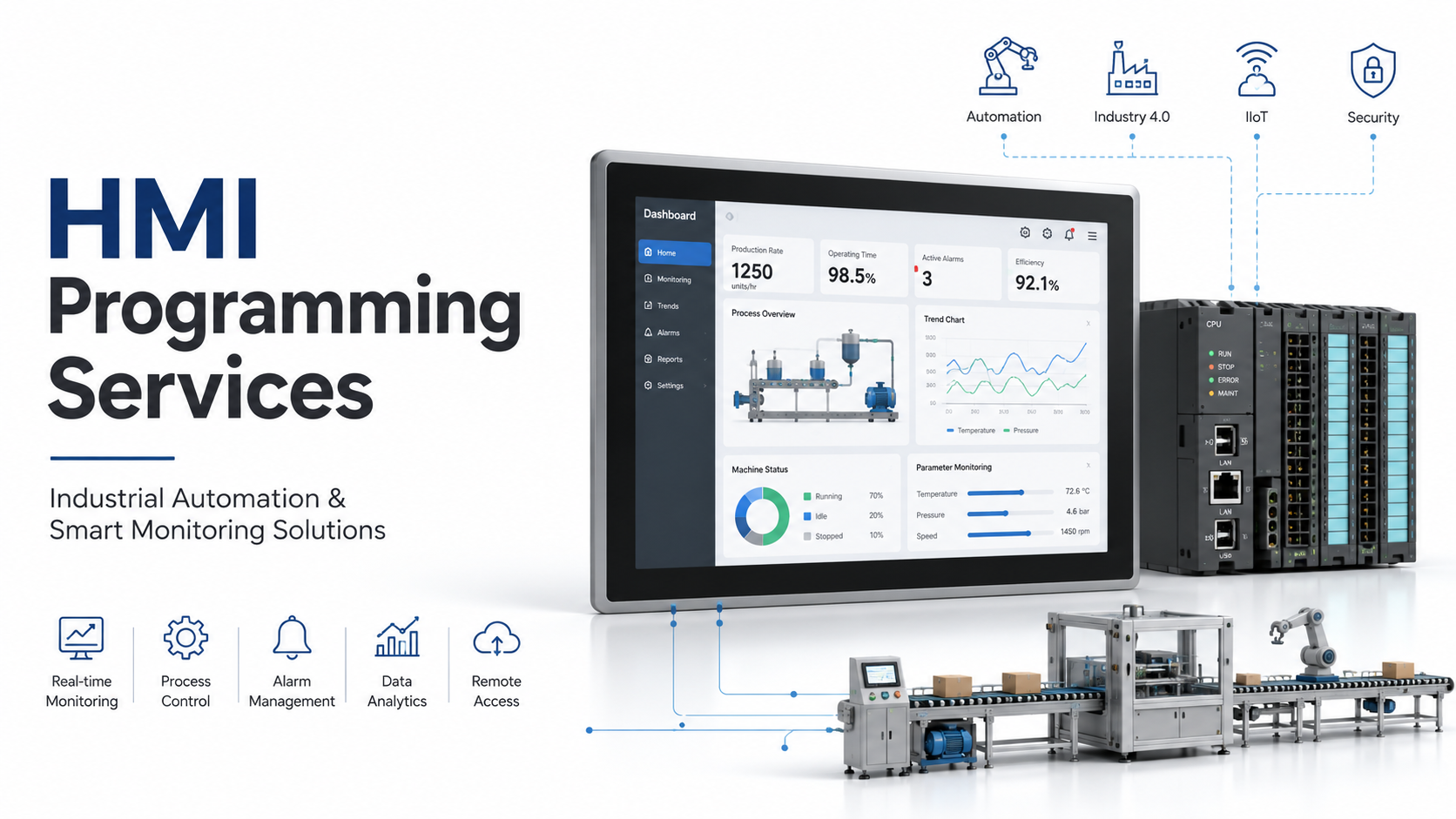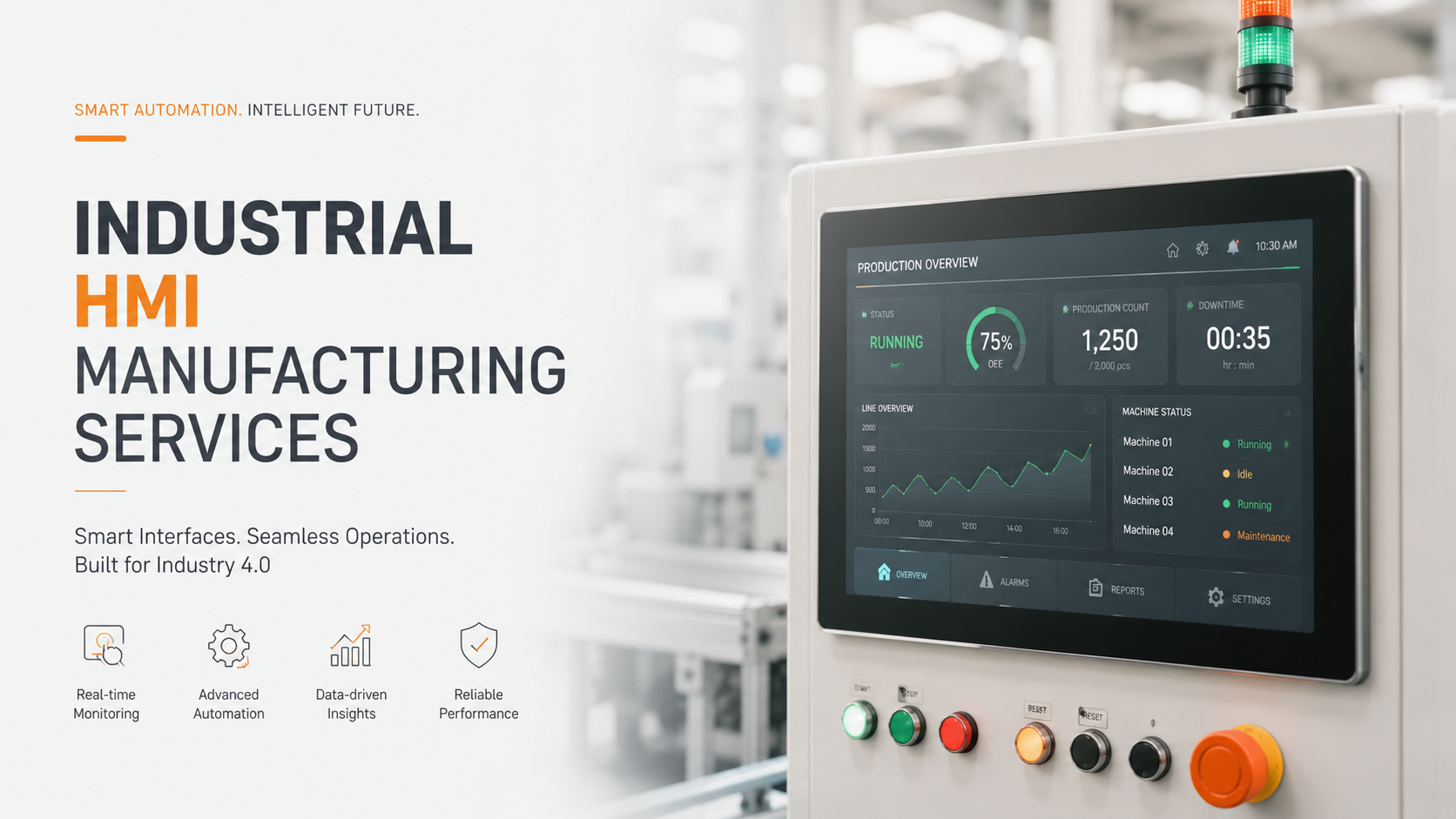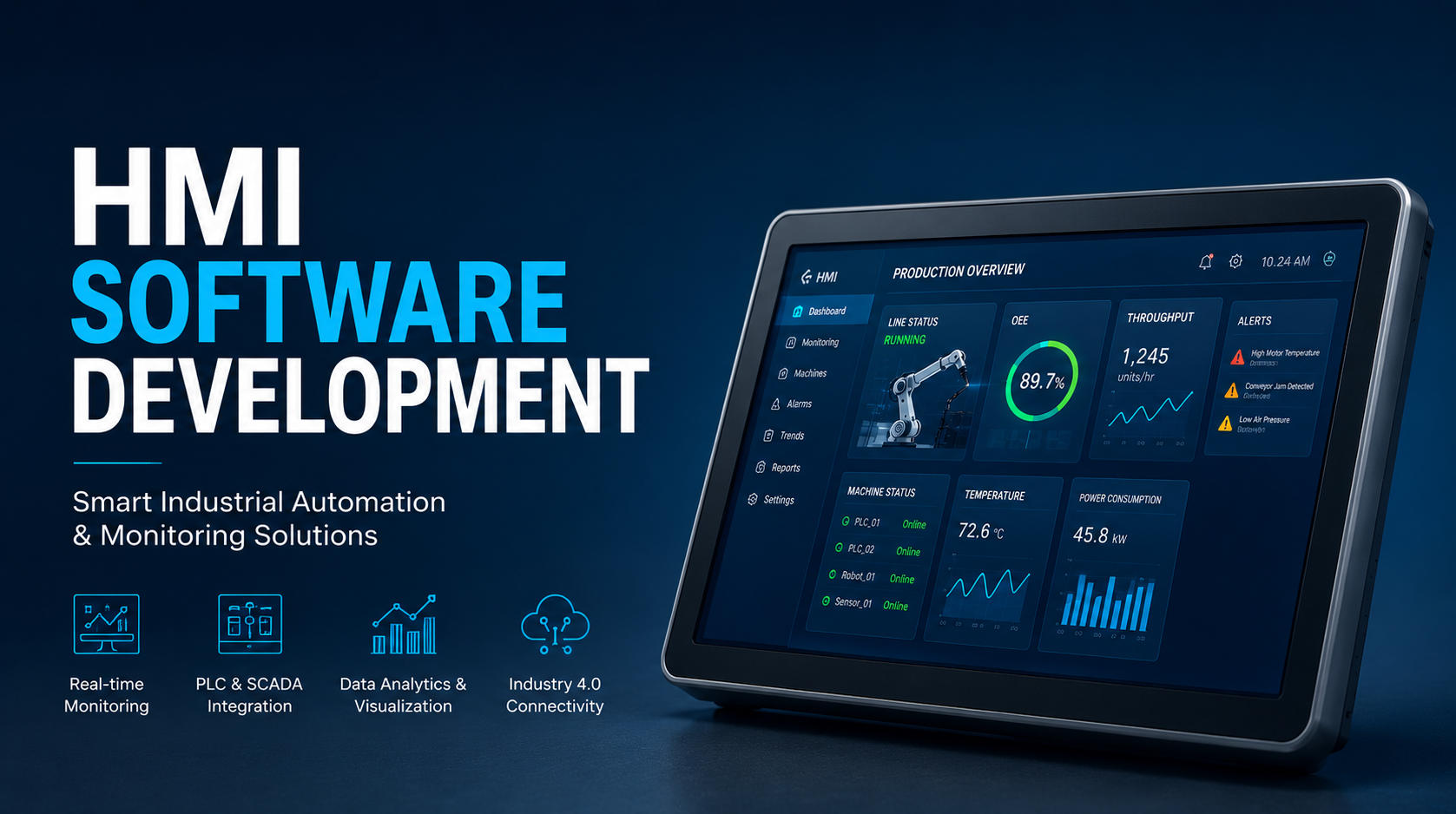
ICurrently in industrial market the bridge between human operators and complex machinery has never been more critical. Human Machine Interface (HMI) software development stands at the forefront of this transformation, enabling industries to monitor, control, and optimize their production processes with unprecedented precision and efficiency.
As manufacturing facilities worldwide embrace Industry 4.0 and smart factory initiatives, the demand for sophisticated, user-friendly industrial dashboards has skyrocketed. Modern HMI systems go far beyond simple control panels, offering real-time data visualization, predictive analytics, and remote accessibility that empowers operators to make informed decisions instantly.
The integration of HMI software with Programmable Logic Controllers (PLCs) and Supervisory Control and Data Acquisition (SCADA) systems creates a comprehensive automation ecosystem. This synergy allows industries to streamline operations, reduce downtime, and enhance overall productivity. At AutomatexLab, we help industries build reliable HMI software solutions that transform operational efficiency and drive measurable business results.
What is HMI Software Development?
HMI software development refers to the creation of digital interfaces that enable human operators to interact with and control industrial machinery and processes. These interfaces serve as the critical communication layer between complex automation systems and the people who manage them.
Unlike traditional control systems that relied on physical buttons, switches, and analog displays, modern HMI systems leverage advanced touchscreen technology and intuitive graphical interfaces. Operators can now monitor multiple machines simultaneously, view real-time data streams, respond to alerts, and execute control commands through visually rich dashboards.
Modern HMI software encompasses several key components:
Touchscreen Interfaces: Operators interact with machines through responsive touch displays that replace physical control panels, offering greater flexibility and easier updates.
Real-Time Monitoring: Live data feeds provide instant visibility into machine performance, production metrics, and operational status across entire facilities.
Alarm Systems: Intelligent notification systems alert operators to anomalies, equipment failures, or process deviations before they escalate into serious problems.
Data Visualization: Complex datasets transform into easy-to-understand charts, graphs, and trend lines that reveal patterns and insights at a glance.
Machine Control Panels: Digital control interfaces allow operators to start, stop, adjust, and fine-tune equipment parameters from centralized locations.
The evolution from mechanical controls to sophisticated digital interfaces represents a fundamental shift in how industries approach automation. Modern HMI systems not only control machines but also collect valuable data that drives continuous improvement and informed decision-making.
How HMI Software Works in Industrial Automation
Understanding the workflow of HMI software within industrial automation systems reveals the seamless integration of hardware and software components. The typical data flow follows this pathway: Sensor to PLC to HMI to Operator.
Data Collection: Industrial sensors continuously monitor physical parameters such as temperature, pressure, flow rates, motor speeds, and position. These sensors convert physical measurements into electrical signals that automation systems can process.
Real-Time Communication: PLCs receive sensor data and execute programmed logic to control industrial processes. The HMI software communicates with PLCs through established industrial protocols, retrieving process data and sending operator commands back to the controllers.
Operator Commands: When operators interact with the HMI interface to adjust setpoints, start equipment, or modify production parameters, these commands travel through the communication network to the appropriate PLCs, which then execute the requested actions.
Monitoring and Alerts: The HMI continuously displays process status, production metrics, and equipment health. When parameters exceed preset thresholds or equipment malfunctions occur, the system generates visual and audible alerts to prompt immediate operator response.
Modern HMI systems communicate using several standard industrial protocols:
Modbus: One of the oldest and most widely supported protocols, Modbus enables communication between electronic devices in industrial environments.
OPC UA: Open Platform Communications Unified Architecture provides secure, reliable data exchange across different platforms and manufacturers, becoming the standard for Industry 4.0 applications.
Ethernet/IP: This protocol leverages standard Ethernet technology to deliver real-time control and information across industrial networks.
MQTT: Message Queuing Telemetry Transport offers lightweight messaging ideal for IoT applications and cloud connectivity in industrial settings.
The reliability and speed of these communication protocols ensure that operators receive accurate, timely information and that their commands execute without dangerous delays.
Key Features of Modern HMI Software
Contemporary HMI software solutions incorporate advanced features that extend far beyond basic monitoring and control functions.
Real-Time Monitoring
Modern HMI systems provide instant visibility into every aspect of industrial operations. Operators view live machine status updates, track production progress against targets, and monitor quality metrics as they occur. This real-time transparency enables rapid response to changing conditions and helps identify optimization opportunities.
Alarm and Notification System
Intelligent alarm management prevents small issues from becoming costly problems. The system categorizes alerts by severity, tracks alarm history, and helps operators prioritize responses. Error alerts notify teams immediately when deviations occur, while predictive notifications warn of potential issues before equipment fails, dramatically reducing unplanned downtime.
Data Visualization
Raw numbers become actionable insights through powerful visualization tools. Interactive graphs reveal production trends over time, customizable dashboards display key performance indicators (KPIs) tailored to specific roles, and historical trend analysis helps identify patterns that inform process improvements and maintenance scheduling.
Remote Accessibility
Cloud-connected HMI systems break down geographical barriers to plant management. Engineers and managers access production data from anywhere with internet connectivity. Mobile monitoring applications enable on-call personnel to view critical information and respond to alerts without being physically present at the facility.
User-Friendly Interface
Intuitive design principles ensure that operators can navigate complex systems with minimal training. Clear visual hierarchies, consistent navigation patterns, and contextual help reduce the learning curve for new operators and minimize the risk of user errors during critical operations.
Multi-Device Compatibility
Modern HMI software adapts seamlessly across different hardware platforms. The same interface scales appropriately for desktop workstations, tablet devices, and industrial touch panels, ensuring consistent user experience regardless of the access point while maintaining full functionality across all platforms.
Benefits of HMI Software Development for Industries
Investing in modern HMI software development delivers tangible operational and financial benefits that quickly justify the initial costs.
Increased Productivity
When operators have instant access to comprehensive process information, they make faster, more informed decisions. Clear visualization of production status helps identify bottlenecks immediately, and streamlined control interfaces reduce the time needed to adjust processes or respond to changing production requirements.
Reduced Downtime
Predictive alerts warn maintenance teams about developing equipment issues before catastrophic failures occur. Faster troubleshooting through detailed diagnostic displays helps technicians identify root causes quickly, and comprehensive historical data aids in understanding failure patterns and implementing preventive measures.
Improved Safety
Enhanced monitoring capabilities provide operators with better awareness of potentially dangerous conditions. Emergency controls remain easily accessible through the HMI interface, and automated safety interlocks prevent unsafe operations. Clear status displays help operators maintain situational awareness even during complex or stressful situations.
Better Data Analysis
Historical reporting capabilities transform operational data into strategic insights. Performance optimization becomes data-driven rather than intuition-based, and detailed production records support compliance reporting and continuous improvement initiatives. The ability to analyze trends over weeks, months, or years reveals optimization opportunities that short-term observation might miss.
Lower Human Error
Automated workflows reduce reliance on manual processes prone to mistakes. Guided procedures walk operators through complex sequences step by step, and validation checks prevent incorrect setpoint entries or inappropriate control actions. Standardized interfaces ensure consistent operation regardless of which operator is on shift.
Industries That Use HMI Software
HMI software has become indispensable across diverse industrial sectors, each with unique requirements and challenges.
Manufacturing Plants
Manufacturing facilities use HMI systems to coordinate complex production lines, track work-in-progress inventory, and ensure quality control. Common applications include assembly line control, robotic coordination, and batch processing management. The operational advantage lies in synchronized production flow, reduced waste, and improved quality consistency.
Oil and Gas
In oil and gas operations, HMI software monitors pipeline pressures, controls refinery processes, and manages offshore platform operations. Safety-critical applications demand reliable interfaces with redundant systems and clear alarm management. These systems help prevent environmental incidents while optimizing production efficiency.
Food Processing
Food processing plants rely on HMI systems for recipe management, temperature control, sanitation cycle monitoring, and traceability documentation. Strict regulatory compliance requirements make detailed record-keeping essential, and HMI systems automatically capture the data needed for audit trails and safety certifications.
Pharmaceuticals
Pharmaceutical manufacturing demands exceptional precision and documentation. HMI systems manage cleanroom environments, control batch processes according to validated procedures, and maintain comprehensive records for regulatory compliance. Electronic batch records generated through HMI systems streamline FDA approval processes.
Water Treatment
Municipal and industrial water treatment facilities use HMI software to monitor water quality parameters, control chemical dosing, and manage filtration processes. Remote monitoring capabilities allow operators to oversee multiple treatment sites from centralized control rooms, improving efficiency while maintaining service reliability.
Automotive Industry
Automotive manufacturing involves highly automated production lines where HMI systems coordinate robotic welders, paint systems, and assembly operations. Real-time monitoring ensures consistent quality across thousands of vehicles, and flexible programming allows rapid changeovers for different models.
Energy and Power Plants
Power generation facilities, whether fossil fuel, nuclear, or renewable, depend on sophisticated HMI systems to monitor and control complex processes. These systems display grid conditions, turbine performance, and environmental parameters while providing operators with the tools to balance load demand and maintain stable power delivery.
Custom HMI Software vs Ready-Made Solutions
Industries face an important decision when implementing HMI systems: invest in custom development or deploy ready-made solutions.
| Feature | Custom HMI | Ready-Made HMI |
|---|---|---|
| Flexibility | High | Limited |
| Scalability | Better | Moderate |
| Branding | Custom | Generic |
| Integration | Advanced | Restricted |
| Cost | Higher Initially | Lower Initially |
Custom HMI development offers significant advantages for industries with complex workflows, unique process requirements, or plans for future expansion. While ready-made solutions provide faster initial deployment and lower upfront costs, they often require compromises in functionality or force processes to adapt to software limitations.
Industries with multiple sites, proprietary equipment, or specific integration requirements typically choose custom development from AutomatexLab to ensure their HMI system aligns perfectly with operational needs. The initial investment pays dividends through improved efficiency, seamless integration with existing systems, and the flexibility to evolve as business requirements change.
Technologies Used in HMI Software Development
Modern HMI development leverages a diverse technology stack that combines industrial automation platforms with contemporary software development tools.
Industrial Platforms:
Siemens WinCC provides comprehensive HMI and SCADA capabilities tightly integrated with Siemens automation hardware. Ignition SCADA offers unlimited licensing and powerful cross-platform capabilities. Wonderware delivers proven reliability in process industries. FactoryTalk View from Rockwell Automation integrates seamlessly with Allen-Bradley PLCs.
Development Technologies:
C# enables development of robust Windows-based HMI applications with rich functionality. Python supports rapid development of custom dashboards and data analysis tools. Node-RED provides visual programming for industrial IoT applications. HTML5 dashboards deliver responsive interfaces accessible from any modern web browser.
Advanced Capabilities:
Cloud integration extends HMI functionality beyond facility boundaries, enabling enterprise-wide visibility and centralized data management. IoT connectivity brings non-traditional devices into the automation ecosystem, expanding monitoring and control capabilities. Edge computing processes data locally for faster response times and reduced bandwidth requirements, particularly valuable in distributed operations.
The selection of appropriate technologies depends on specific project requirements, existing infrastructure, and long-term scalability needs.
HMI Software Development Process
Successful HMI implementation follows a structured development methodology that ensures reliable, user-friendly results.
Requirement Analysis
The process begins with thorough understanding of operational workflows, user roles, data requirements, and integration points. Engineers work closely with plant personnel to document current processes, identify pain points, and define success criteria for the new system.
UI/UX Design
Design teams create intuitive interfaces that present complex information clearly and enable efficient operation. Mockups undergo review with actual operators to ensure the design supports their workflow rather than complicating it. Visual hierarchies emphasize critical information and frequently used controls.
PLC Integration
Technical teams establish reliable communication between HMI software and existing PLCs or other control systems. This phase includes protocol configuration, tag mapping, data validation, and communication testing to ensure robust, real-time data exchange.
Dashboard Development
Developers build the actual interface according to approved designs, implementing all visualization components, control functions, alarm management, and reporting capabilities. Modular architecture facilitates future modifications and additions.
Testing and Simulation
Comprehensive testing validates all functionality before deployment. Simulation environments allow testing of alarm responses, control sequences, and edge cases without disrupting production. Performance testing ensures the system meets response time requirements under full load.
Deployment
Carefully planned deployment minimizes disruption to ongoing operations. Phased rollouts, parallel running with existing systems, and comprehensive operator training ensure smooth transitions. Technical teams remain on-site during initial operation to address any immediate issues.
Maintenance and Support
Ongoing support includes software updates, performance optimization, troubleshooting, and enhancements as operational needs evolve. Regular maintenance ensures the system continues to deliver value throughout its operational life.
At AutomatexLab, we follow this structured development process to ensure industrial reliability and deliver HMI systems that exceed performance expectations from day one.
Challenges in HMI Development
Despite significant advances in technology, HMI development still presents several technical and operational challenges.
Legacy Machine Integration
Many industrial facilities operate equipment purchased decades ago that uses outdated communication protocols or proprietary systems. Bridging modern HMI software with legacy machinery requires specialized knowledge, protocol converters, and sometimes custom interface development.
Real-Time Performance
Industrial processes demand immediate response to changing conditions. HMI systems must update displays, process operator commands, and trigger alarms with minimal latency. Achieving this performance requires careful system architecture, efficient database design, and optimized communication protocols.
Cybersecurity Risks
As industrial systems become increasingly connected, they face growing cybersecurity threats. HMI systems require robust security measures including user authentication, role-based access control, encrypted communications, and network segmentation to protect against unauthorized access and cyber attacks.
Hardware Compatibility
Industrial environments include diverse hardware from multiple manufacturers spanning different technology generations. Ensuring HMI software works reliably across various display types, operating systems, and industrial computers requires extensive testing and sometimes custom driver development.
Operator Usability
Designing interfaces that work well for operators with varying technical backgrounds and experience levels presents ongoing challenges. Systems must be powerful enough for expert users while remaining accessible to occasional operators, all while functioning reliably in stressful situations.
Experienced providers like AutomatexLab bring deep expertise in solving these industrial automation challenges, having encountered and resolved similar issues across numerous installations and industries. This experience translates into faster implementation, fewer surprises, and more reliable long-term operation.
Future Trends in HMI Software Development
The HMI software landscape continues to evolve rapidly as new technologies mature and industrial requirements advance.
AI-Powered HMIs
Artificial intelligence integration enables HMI systems to provide intelligent recommendations, predict optimal setpoints, and identify anomalies that human operators might miss. Machine learning algorithms analyze historical data to suggest process improvements and forecast equipment maintenance needs with increasing accuracy.
Predictive Maintenance Dashboards
Advanced analytics transform maintenance from reactive or schedule-based to truly predictive. HMI dashboards display equipment health scores, remaining useful life estimates, and maintenance priority rankings. This shift reduces unnecessary maintenance while preventing unexpected failures.
Voice-Controlled Industrial Interfaces
Voice recognition technology is beginning to appear in industrial settings, allowing operators to query system status, acknowledge alarms, or execute commands hands-free. This capability proves particularly valuable when operators need information while performing other tasks or working in locations away from traditional displays.
AR/VR in Manufacturing
Augmented reality overlays digital information onto physical equipment, helping technicians visualize hidden components, access maintenance procedures, or see real-time sensor data superimposed on machinery. Virtual reality enables remote operators to experience immersive plant walkthroughs and practice emergency response procedures in safe, simulated environments.
Cloud SCADA Systems
Cloud-based architectures eliminate the need for on-premises servers while enabling unprecedented scalability and accessibility. Organizations can deploy standardized HMI interfaces across global facilities, aggregate data for enterprise-wide analysis, and leverage cloud computing power for advanced analytics without major capital investments.
Industrial IoT Integration
The proliferation of low-cost sensors and wireless connectivity expands what can be monitored and controlled. HMI systems increasingly incorporate data from IoT devices, providing visibility into previously unmonitored aspects of operations and enabling more comprehensive process optimization.
These trends align perfectly with Industry 4.0 initiatives and smart factory visions, positioning forward-thinking organizations to leverage technology for competitive advantage.
Why Choose AutomatexLab for HMI Software Development
Selecting the right development partner significantly impacts the success of your HMI implementation.
AutomatexLab brings specialized industrial automation expertise spanning multiple sectors and technology platforms. Our team understands the unique challenges of industrial environments and designs solutions that deliver reliable performance under demanding conditions.
PLC and SCADA Integration: We have extensive experience integrating HMI software with diverse control systems from all major manufacturers. Whether your facility runs Siemens, Rockwell, Schneider Electric, or other platforms, our engineers ensure seamless communication and robust data exchange.
Custom Dashboard Development: We build interfaces tailored to your specific workflows, not generic solutions that force you to adapt your processes. Each dashboard reflects the unique requirements of different user roles, from operators to maintenance technicians to plant managers.
Scalable Architecture: Our designs accommodate future growth, allowing you to add new lines, integrate additional equipment, or expand to new facilities without rebuilding from scratch. Modular architecture ensures your investment retains value as your operation evolves.
Industry-Focused Solutions: We understand the specific requirements of different sectors. Food processing facilities need different capabilities than oil refineries, and pharmaceutical plants face unique regulatory requirements. Our solutions address industry-specific challenges rather than offering one-size-fits-all approaches.
Maintenance and Support: Our relationship extends beyond initial deployment. Comprehensive support plans ensure your system continues to perform optimally, and our team remains available to implement enhancements as your needs change.
We have successfully delivered HMI solutions across manufacturing, process industries, utilities, and discrete manufacturing sectors. Our client-focused approach ensures we listen carefully to your requirements, communicate clearly throughout the project, and deliver solutions that exceed expectations.
Transform Your Industrial Operations with Modern HMI Software
The industrial landscape demands more than basic monitoring and control. Success requires sophisticated interfaces that empower operators, deliver actionable insights, and adapt as your operation evolves.
Looking for scalable and reliable HMI software development services? AutomatexLab helps industries build modern automation interfaces that improve efficiency, monitoring, and operational control. Our team combines deep industrial expertise with cutting-edge technology to deliver solutions that drive measurable results from day one.
Whether you are modernizing legacy systems, implementing new production lines, or building smart factory capabilities, we bring the experience and technical knowledge to ensure your success. Contact us today for a free consultation and discover how custom HMI software can transform your operation.
FAQs
HMI software development involves creating digital interfaces that enable human operators to monitor and control industrial machinery and processes. These systems provide real-time visualization of production data, alarm management, and control capabilities that bridge the gap between complex automation systems and the people who manage them.
HMI typically refers to the local operator interface for a specific machine or process area, while SCADA encompasses the supervisory system that oversees multiple processes across entire facilities or multiple sites. SCADA systems often incorporate multiple HMI interfaces as components of a larger supervisory control architecture.
HMI software is essential across manufacturing, oil and gas, food processing, pharmaceuticals, water treatment, automotive production, energy generation, chemical processing, and virtually any industry involving automated equipment or continuous processes. Any operation requiring human oversight of automated systems benefits from modern HMI solutions.
HMI development costs vary significantly based on project scope, complexity, number of integration points, and customization requirements. Small projects might range from several thousand dollars, while enterprise implementations can reach hundreds of thousands. Custom solutions typically require higher initial investment but deliver better long-term value for complex operations.
Yes, modern HMI software is specifically designed to communicate with PLCs from all major manufacturers. Standard industrial protocols like Modbus, OPC UA, Ethernet/IP, and Profinet enable reliable data exchange between HMI interfaces and diverse control systems regardless of manufacturer.
HMI development leverages industrial platforms like Siemens WinCC, Ignition SCADA, and Wonderware, combined with programming languages including C#, Python, and web technologies like HTML5. Cloud integration, IoT connectivity, and edge computing increasingly supplement traditional architectures.
When properly implemented with appropriate security measures, cloud-based HMI systems can be very secure. Essential protections include encrypted communications, multi-factor authentication, role-based access control, regular security audits, and network segmentation. Reputable providers implement security best practices that often exceed what individual facilities can achieve with on-premises systems.
Custom HMI software provides flexibility to match unique operational workflows, seamless integration with existing systems, scalability for future growth, and branding consistent with company standards. Industries with complex processes, multiple sites, or specific regulatory requirements typically benefit most from custom development rather than forcing their operations to adapt to generic solutions.